
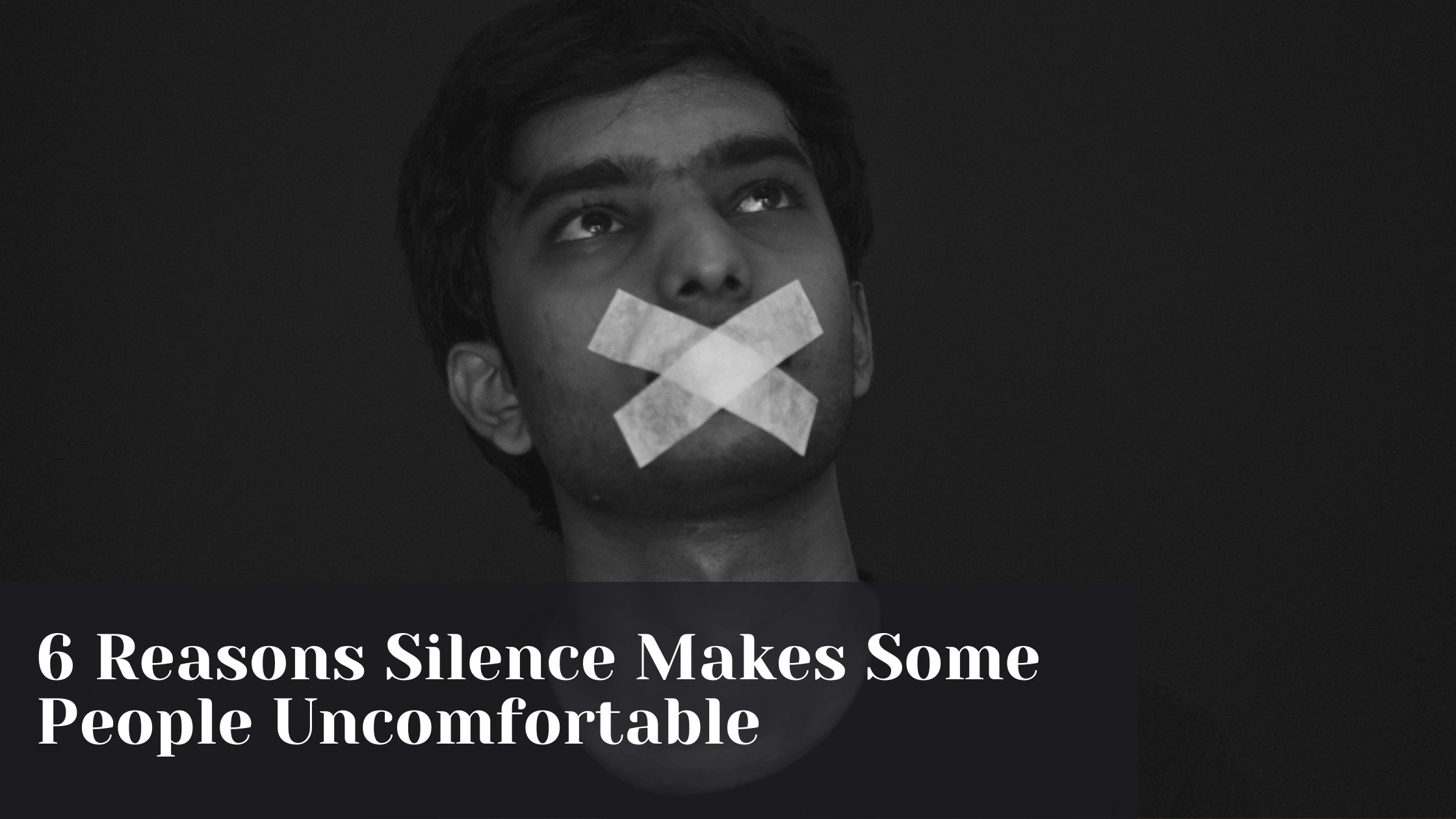
You’re having coffee with a friend when the conversation naturally lulls. Suddenly, the silence feels deafening. You scramble for something—anything—to say. Your mind races: “Should I say something? Am I being boring? Do they think I’m awkward?” Within four seconds, what should be a comfortable pause has transformed into a moment of social panic.
If you’ve experienced this, you’re far from alone. Research conducted at the University of Groningen in the Netherlands found that it takes only four seconds of silence in conversation for people to feel uncomfortable, rattled, or insecure. Four seconds. That’s barely enough time to take a breath, yet for many people, it feels like an eternity.
But here’s what’s fascinating: Not everyone experiences silence this way. Studies show that cultural norms vary dramatically—while Americans and Europeans start feeling uncomfortable after about four seconds of conversational silence, Japanese people are comfortable with pauses lasting up to 8.2 seconds. The Japanese concept of haragei even suggests that the most effective communication sometimes involves not speaking at all.
So what is it about silence that some people find so unbearable? And why do others seem perfectly comfortable with it? The answers reveal something profound about how we’re wired for connection, how our brains process uncertainty, and what silence forces us to confront that we’d often rather avoid.
The 6 Reasons Silence Triggers Discomfort
1. Our Brains Interpret Silence as a Social Threat
When conversation flows smoothly, your brain receives constant feedback that everything is okay—you’re accepted, you’re interesting, you belong. But when silence interrupts that flow, something shifts in your nervous system.
Research from 2011 by Koudenburg and colleagues published in the Journal of Experimental Social Psychology found that fluent conversations are associated with feelings of belonging, self-esteem, and social validation. When even a brief silence disrupts this flow, negative emotions and feelings of ostracism can bubble up.
The neurological reality: Your amygdala—the brain’s threat-detection center—can become activated during awkward silences. This is the same part of your brain that triggers fight-or-flight responses. According to research on socially awkward situations, silence can activate emotional brain areas that process social uncertainty as a potential threat.
What happens in your body: That uncomfortable feeling when conversation stops isn’t just psychological. Studies from the University of Groningen found that brief silences in conversation can trigger stress responses, increasing cortisol levels—the hormone associated with anxiety.
Why evolution wired us this way: Throughout human history, social connection was literally survival. Being excluded from the group could mean death. Your ancestors who were highly attuned to signs of social rejection—including silence that might signal disapproval or exclusion—were more likely to survive and pass on their genes. You’ve inherited that sensitivity.
The modern paradox: Today, silence in a coffee shop conversation doesn’t actually threaten your survival. But your ancient brain doesn’t know that. It still interprets conversational pauses as potential signals of social rejection, activating the same alarm systems that once protected your ancestors from being cast out of the tribe.
2. Silence Creates Uncertainty (And Humans Hate Uncertainty)
In the quiet space between spoken words lurks something humans generally don’t tolerate well: uncertainty. When someone stops talking, especially unexpectedly, your mind immediately starts trying to fill in the gaps.
What your brain does during silence: According to psychological research, when a conversation pauses unexpectedly, your mind starts racing: “Did I say something wrong? Are they mad at me? Do they think I’m boring?” This reaction is tied to our evolutionary need for social connection—humans are wired to interpret social cues, and when those cues are missing, it leads to anxiety.
The control issue: What we don’t know, we can’t control—and what we can’t control casts us into an unsafe and insecure limbo. During silence, anticipation about what might be said next, or how others will respond, fuels anxiety.
Research on linguistic expectations by linguist Theresa Matzinger found that longer pauses before answering are interpreted by both native and non-native speakers as indicating lower knowledge and lower confidence. We make split-second judgments based on silence—and we assume others are making those same judgments about us.
The interpretation trap: Without words to clarify what someone is thinking or feeling, we tend to fill the vacuum with our own insecurities and worst-case scenarios. As psychology research shows, in the absence of conversation, individuals often misinterpret silence as disinterest, disapproval, or rejection—even when that’s not what the other person is experiencing at all.
3. Modern Life Has Conditioned Us to Fear Quiet
We live in an era of unprecedented constant stimulation. Between smartphones, social media, background music, podcasts, and 24/7 news cycles, silence has become almost exotic—something we rarely experience and increasingly don’t know how to handle.
Research from 2012 by Bruce Fell suggests that digital technology and social media are exacerbating not only people’s intolerance for silence but also their dread of it. For some people, this fear has become so intense it results in panic attacks or significant anxiety—a phenomenon that’s been termed “sedatephobia” (from the Greek sedate meaning “silent” and phobos meaning “fear”).
The stimulation addiction: We’re bombarded with information and stimuli constantly. When we encounter silence, it interrupts that rhythm of constant input, leaving us face-to-face with our thoughts. And for many people, that’s the last place we want to be.
The comparison effect: Silence feels even more uncomfortable in modern life because we’re constantly comparing ourselves to the curated, entertaining content we consume online. When a real-life conversation hits a pause, it can feel boring by comparison to the rapid-fire stimulation of scrolling through social media.
The lost skill: Previous generations had more practice with silence—quiet evenings, long car rides without podcasts, meals without television. Modern life has eroded our tolerance for quiet moments, making silence feel increasingly foreign and uncomfortable.
4. Silence Forces Us to Confront Our Inner Dialogue (Which Isn’t Always Pleasant)
When external noise stops, internal noise often gets louder. Silence creates space for your automatic thoughts to surface—and those thoughts aren’t always kind or comfortable.
What happens in the quiet: According to psychological research, even when we’re by ourselves, silence can be ominous. We can’t escape our automatic thoughts, particularly ones that spotlight fears and insecurities. This can cause rumination—repetitive, often negative thought patterns.
Most people think that silences are filled with heaviness, recriminations, self-doubt, and fear. When silence comes, it comes with all the shadows we’d rather not think about. To avoid facing ourselves, we choose to stay away from silence.
The avoidance pattern: Constant noise and conversation can function as a form of distraction from uncomfortable internal experiences—anxiety, depression, unresolved conflicts, existential questions. When silence removes that distraction, we’re left facing aspects of ourselves and our lives that the structure of noise usually drowns out.
For people with social anxiety: Research shows that individuals with social anxiety are often hyperaware of social dynamics. When conversation lapses into silence, they may interpret the pause as personal failure or a sign of rejection. The heightened self-consciousness can make even brief silences feel overwhelmingly awkward, leading to increased anxiety and self-criticism.
5. Silence Amplifies Self-Consciousness and Fear of Judgment
The moment a conversation pauses, a spotlight can feel like it’s suddenly shining directly on you. Every second of silence becomes an opportunity for self-scrutiny and imagined judgment from others.
The self-consciousness spiral: When you’re already dealing with self-consciousness, silence only highlights it. You become hyperaware of your own presence: “Everyone’s observing me now, and I haven’t said anything for seven seconds.”
The judgment assumption: A core aspect of social anxiety is the fear of being negatively evaluated by others. During silent moments, individuals may ruminate on their recent statements or behaviors, worrying that they’ve said something inappropriate or that others are forming negative opinions about them.
The pressure to perform: In professional or social contexts, awkward silences can be related to the pressure to “say something interesting” or the fear of judgment from others. This pressure reflects our need for social approval and acceptance. The irony is that the more pressure we feel, the more we block ourselves, increasing the likelihood of those dreaded dead spots in conversation.
The competence worry: Research shows that silence might trigger worry that you don’t have the right social skills, that you didn’t ask the right question, that you’re being weird, awkward, or uncomfortable. The silence becomes evidence—in your mind—of social inadequacy.
6. Cultural and Social Programming Teaches Us Silence Means Something Is Wrong
We learn early that silence in certain contexts signals a problem. A silent classroom means students aren’t engaged. A silent dinner table suggests family conflict. A silent partner means something is bothering them. We’re conditioned to interpret silence as a symptom of something negative.
The conversational obligation: Research shows that awkward silences often occur when one person doesn’t take their “turn” to move communication forward. Every conversation involves an implicit obligation to take turns—not just responding, but providing information that continues the exchange. When someone gives only minimal responses, leaving the burden of conversation to fall on the other person, silences feel awkward because social norms are being violated.
Cultural differences in meaning: Western society values constant verbal exchange more than many Eastern cultures. In Japan, silence can indicate respect, thoughtfulness, or agreement. In many Western contexts, it’s more likely to be interpreted as awkwardness, disagreement, or disinterest. These cultural scripts run deep—if you were raised in a culture that treats silence as problematic, you’ve internalized that belief.
The relationship context: Psychologist Emma M. Templeton’s research published in PNAS Nexus found that gaps in conversations between friends are experienced more positively than the same gaps between strangers. The exact same pause feels different depending on relationship context. With close friends or partners, silence can feel comfortable or even intimate. With strangers or acquaintances, identical silences feel awkward because we haven’t established the trust that makes quiet comfortable.
When Silence Becomes Comfortable
Here’s what research reveals: Discomfort with silence is largely learned, which means it can also be unlearned. People who are comfortable with silence have typically:
Developed secure attachments: Comfortable silence often signals a deep level of trust and security between people. Not every moment needs to be filled with conversation to feel connected.
Practiced mindfulness: Regular exposure to quiet—through meditation, nature walks, or simply turning off devices—builds tolerance for silence.
Reframed silence as valuable: Research shows that silence serves important functions: it lowers blood pressure, prevents plaque formation in arteries, boosts the immune system, and promotes hormone regulation. Silence also provides space for receptivity, listening, discernment, and intimacy.
Developed emotional security: People who are comfortable with silence generally have lower anxiety about social evaluation and stronger self-worth that doesn’t depend on constant external validation through conversation.
Learning to Sit With Silence
If silence makes you uncomfortable, you’re not weak or socially inept—you’re responding to deep evolutionary programming combined with modern conditioning. But you can develop a healthier relationship with quiet moments:
Reframe silence as neutral: Not every pause is awkward. Silence is simply space between words—what you make it mean determines how it feels.
Practice small doses: Start with brief moments. Count to three before responding in conversations. Notice that the world doesn’t end.
Examine your fears: What insecurities make you uncomfortable with silence? Looking for patterns helps you address the root causes rather than just managing symptoms.
Remember the purpose: Silence serves important functions—it gives others space to respond, creates room for deeper thought, and can actually make conversations more interesting.
Accept it’s not all your responsibility: When silence happens, it’s not 100% your job to fill it. The other person can contribute too.
The Paradox of Silence
In our noise-saturated world, silence has become something we simultaneously crave and fear. We desperately need quiet to think, reflect, and restore ourselves. Yet when silence arrives, many of us panic and rush to fill it.
Understanding why silence makes you uncomfortable is the first step toward developing a healthier relationship with it. Your discomfort isn’t a character flaw—it’s a combination of evolutionary programming, cultural conditioning, modern overstimulation, and learned patterns that can all be shifted with awareness and practice.
As one researcher noted, the science of silence is a mirror reflecting how much we yearn for control, clarity, and connection in our interactions. When you can become comfortable with silence, you gain access to something increasingly rare and valuable: the ability to be present with yourself and others without constant noise filling the space between you.
That’s not just about tolerating awkward pauses. It’s about reclaiming your capacity for depth, reflection, and genuine connection—gifts that only silence can provide.
How do you experience silence? Does it make you uncomfortable, or have you learned to embrace it? Share your thoughts in the comments—understanding our different relationships with silence helps us all develop more awareness of our patterns.
If this article helped you understand your discomfort with silence differently, please share it with someone who might benefit. Sometimes the most powerful insights come from recognizing that what feels like a personal failing is actually a widespread human experience with deep evolutionary and cultural roots.