
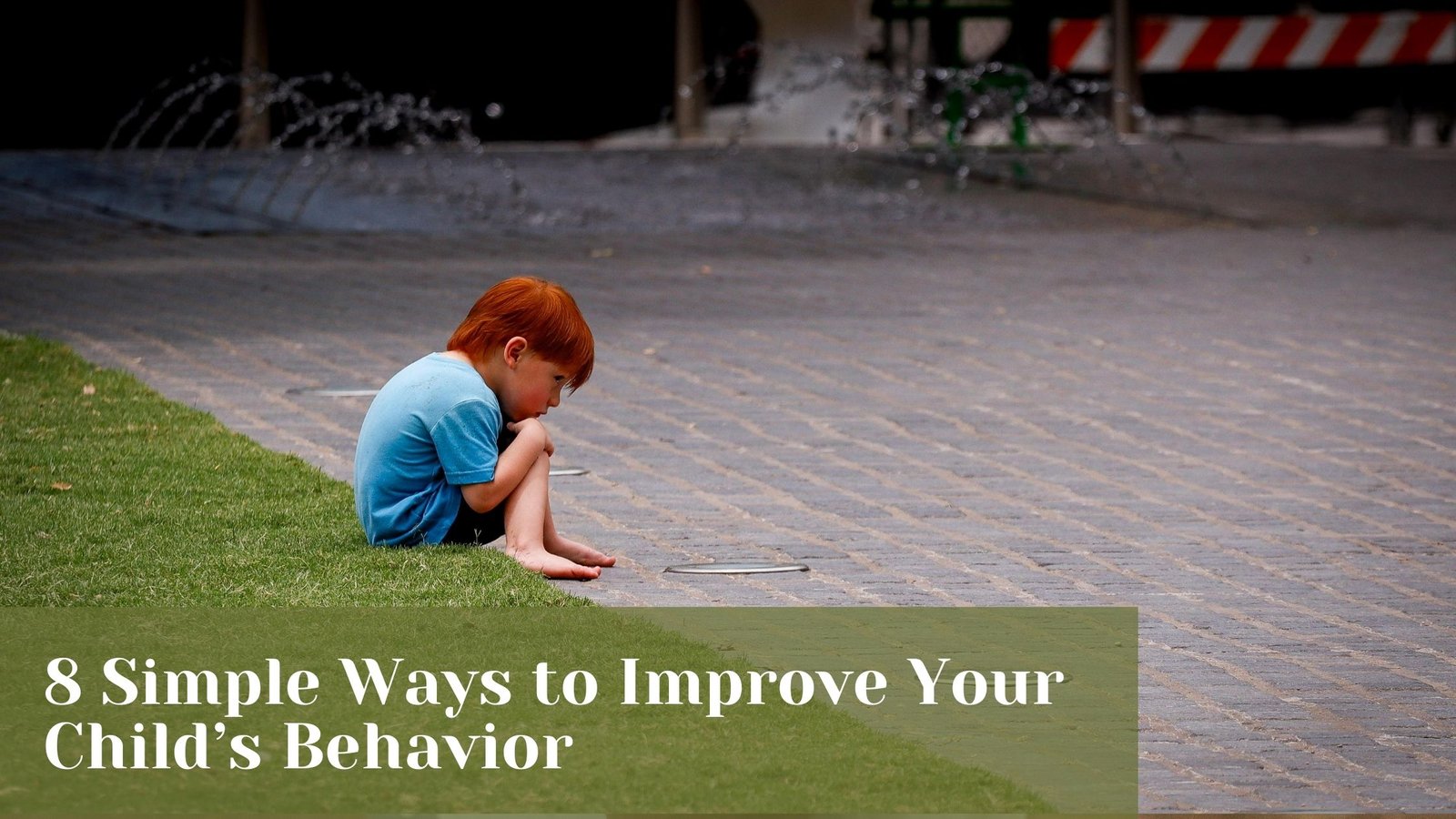
The day starts with a small battle over breakfast. By mid-morning there’s been a meltdown over screen time. Lunch involves a negotiation that shouldn’t require negotiation. By afternoon you’re repeating yourself in a tone you don’t love, and by bedtime you’re tired in a specific, deep-down way that’s less about hours and more about the relentless accumulation of friction.
Most parents have days like this. Most parents, in the middle of one, would give almost anything for a simple, practical thing they could do differently that would actually work.
The good news is that decades of behavioral research — some of the most rigorous intervention science in all of child psychology — has identified exactly these things. They’re not personality overhauls or discipline philosophies. They’re specific, small, evidence-backed adjustments to how you structure time, deliver feedback, and set up the daily environment. And they work across a remarkably wide range of behavioral challenges, ages, and temperaments.
Here are eight of them.
What the Research Base Tells Us First
Before the strategies, one finding that shapes all of them.
The Triple P (Positive Parenting Program) meta-analysis corpus — one of the largest evidence bases in parenting intervention science, reviewed comprehensively in Clinical Child and Family Psychology Review (Sanders et al., 2023, PMC) confirms what multiple independent meta-analyses have established: modifying specific, discrete parenting practices leads to significant, sustained improvements in children’s behavior and adjustment. Not broad parenting philosophy changes. Not relationship overhauls. Specific practices — the particular things parents say and do in the particular moments when behavior is occurring — are the levers that produce measurable change.
The PLOS ONE multilevel meta-analysis of experimentally manipulated discrete parenting behaviors (Kok and colleagues, 2018 — 19 studies, 75 effect sizes) provides the quantitative backbone: parental praise produced significant compliance effects (d = 0.43), consistent time-out produced significant effects (d = 0.69), and specific instruction quality significantly outperformed vague or repeated instructions. The research tells us which specific behaviors move the needle — and the eight below are drawn directly from that evidence base.
The 8 Ways
1. Praise the Behavior You Want to See More Of — Immediately and Specifically
This is the most consistently supported behavioral principle in child development research, and also the most consistently underused. Parents tend to notice behavior that creates problems and respond to it. The behavior that is already going well — the morning routine that started smoothly, the sharing that happened without being asked, the screen turn-off that actually happened on cue — passes unacknowledged.
Behaviorally, this creates a problem: children learn from what gets noticed. The pattern most family environments accidentally install is one in which the surest way to attract a parent’s full attention is to do something wrong.
A PMC study measuring parents’ actual praise-to-criticism ratios during observed parent-child interactions (Perez-Caballero and colleagues, 2016, PMC) found something genuinely startling: most parents reported praising their children often and criticizing rarely — but when observed, they criticized their children nearly three times more than they praised them. The gap between what parents believed they were doing and what they were actually doing was substantial. Self-perception and behavior were not the same.
The same study confirmed what the experimental literature consistently shows: parental praise is directly and significantly associated with reduced externalizing behavior problems. More specifically, the 50-year literature on behavior-specific praise, reviewed comprehensively in a systematic review of 57 studies (Ennis, Royer, Lane and Dunlap, 2020) found that praise delivered immediately after the desired behavior occurs reliably increases that behavior in children across ages, settings, and behavioral profiles.
What this looks like:
Catch it early. Before the routine has broken down, before the request has been ignored three times, before the conflict has escalated — notice the small moment where the behavior was right. “You put your plate in the sink without being asked. Thank you.” “You came when I called you the first time. I noticed that.” “You and your sister worked that out yourselves — that was really good.” The behavior being praised doesn’t need to be extraordinary. The noticing is what teaches.
2. Build Predictable Daily Routines — and Hold Them Consistently
Children are not, temperamentally, well-suited to a world of perpetual improvisation. They are organisms that are still developing the executive function required to manage uncertainty, plan ahead, and self-regulate under novel conditions. Predictable routines reduce the cognitive and regulatory demand on children by making the future legible. The child who knows what comes next doesn’t have to manage the anxiety of not knowing — and that anxiety, unaddressed, frequently expresses itself as resistance, defiance, and meltdown.
The comprehensive systematic review of routines and child development (Selman & Dilworth-Bart, 2024, ResearchGate) — synthesizing decades of research — found that family routines are associated with improved executive function, emotion and behavior self-regulation, and school readiness. Children with more predictable routines at home tend to be more cooperative, more compliant, and more willing to engage with others. The review also identified a specific behavioral mechanism: routines develop schemas for scheduled activities, giving children the opportunity to practice behavioral monitoring in structured, low-stakes conditions. The self-regulation they develop inside predictable routines transfers to less structured settings.
The Blair et al. PMC longitudinal study of 1,292 children from birth into early elementary school found that household chaos — the absence of predictability, structure, and routine — indirectly predicted kindergarten behavioral regulation through its impacts on parenting behaviors and children’s early executive function. Chaos disrupts the parenting environment which disrupts the child’s self-regulatory development. The causal chain runs from environmental predictability to regulatory capacity to behavioral outcomes.
What this looks like:
Pick the two or three daily flashpoints — morning, after school, bedtime — and build a sequence for each that is specific enough to be followed without decision-making. Not a rigid schedule but a predictable order: wake, bathroom, breakfast, dressed, bag. Dinner, homework, bath, reading, lights out. The sequence is what matters, not the timing. Children regulate more easily inside predictable sequences than inside daily ambiguity.
3. Give One Clear Instruction at a Time and Wait for It to Complete
This sounds simple because it is. It is also among the most frequently violated principles in parenting practice — not from carelessness, but because parents have an entire mental list of things that need to happen and it is genuinely tempting to deliver them together.
The Parent-Child Interaction Therapy clinical research (Skowron and colleagues, 2024, PMC) builds instruction quality directly into its earliest treatment sessions, for a specific reason: simple commands with specific observable endpoints produce the most reliable compliance in children. Not because children are lazy, but because working memory is limited, because transition demands are neurologically costly, and because a multi-step instruction delivered in a single sentence requires the child to simultaneously receive, parse, hold, order, and initiate several distinct actions — a working memory and executive function load that often exceeds available capacity, particularly in younger children or children who are already emotionally activated.
The instruction structure that research supports is: one request, clearly stated, with an observable endpoint, delivered with eye contact and in physical proximity. Wait for completion before giving the next instruction. This is slower in the short term and significantly more effective in the medium term — because the child gradually learns that instructions are real, singular, and followed through on, rather than ambient noise that cycles indefinitely until someone gives up.
What this looks like:
Before you give an instruction, strip it to its essential first step. Not “get ready for school” but “shoes on.” Not “clean your room” but “put the Legos in the bin.” Not “be ready to leave in ten minutes” but “coat on, please.” When that step is complete, give the next. The sequence arrives — just not all at once.
4. Follow Through Every Single Time — But Choose Your Battles Deliberately First
These two are paired because they only work together. Consistent follow-through without deliberate battle selection produces exhaustion. Deliberate battle selection without consistent follow-through produces the coercion cycle — children who have learned that persistence beats enforcement.
Patterson’s Coercion Theory (foundational research from the Oregon Social Learning Center, replicated across four decades of subsequent work) establishes the mechanism: the parent who enforces inconsistently is accidentally training the child to escalate. The escalation occasionally succeeds — the limit softens, the instruction is abandoned, the threat doesn’t materialize — and intermittent success is one of the most powerful behavioral reinforcement schedules known to psychology. The behavior persists, and often intensifies, because it has intermittently paid off.
The solution is not to enforce everything always. That path leads to unsustainable escalation. The solution is to decide, deliberately, which instructions you’re prepared to follow through on before you give them — and then follow through on those, every time, without drama, as a reliable feature of the environment. The rule that holds consistently isn’t the rule that gets tested.
The Stormshak, Bierman and colleagues PMC study (2000, N = children in early elementary school) confirmed that inconsistency in parental follow-through was among the most robust predictors of developing oppositional and aggressive behavior in young children — more predictive than harshness alone. The child’s behavioral system was responding rationally to an environment where the rules were not reliable.
What this looks like:
Before saying “do it now or we won’t go,” ask yourself honestly: am I prepared to not go? Before saying “one more time and the game goes away,” ask yourself: am I prepared to take the game away? If the answer is no, don’t make the threat. Give an instruction you can actually follow through on, calmly, and then do it. The credibility accumulated across a hundred followed-through instructions changes the behavioral environment more durably than any consequence strategy.
5. Get Genuinely Present — Ten Minutes, Child-Led, Every Day
This one looks nothing like a behavioral strategy. It doesn’t feel like one. And it has some of the strongest compliance and behavioral outcome data in the parent training literature.
The ten-minute daily special play time — in which a parent gives a child undivided, unjudging, fully present attention while the child leads the activity — is the cornerstone of Parent-Child Interaction Therapy and the element that evidence-based parent training programs across multiple decades have found most predictive of compliance improvement. Not because it teaches compliance. Because it fills the connection account that compliance runs on.
The PCIT randomized trial research (Skowron and colleagues, 2024, PMC) found that as parents became more predictable and warm interactive partners through the PRIDE skills (Praise, Reflection, Imitation, Description, Enjoyment) — practiced primarily in this child-directed play format — children learned that following directions was not overly demanding or punishing and became more pleasant and reinforcing interactive partners as a result. Compliance followed warmth, not the other way around.
The father-child warmth complementarity study — tracking 1,030 parent-child dyads (Journal of Family Psychology / PMC, 2022) found that father-child warmth complementarity — the mutual, moment-to-moment warm responsiveness between parent and child — predicted increases in observed cooperation and decreases in conflict. Warmth wasn’t a background condition. It was the active ingredient.
What this looks like:
Ten minutes. No phones. No teaching, correcting, redirecting, or questioning. Let the child choose the activity and lead it. Your job is to be fully present and to narrate what you observe (“you’re putting the blue blocks here”) and appreciate what you see (“this is really interesting what you’re building”). That’s it. The simplicity is the point — and the daily accumulation is what changes the relational environment that behavior occurs inside.
6. Regulate Yourself First — Your Nervous System Sets the Room’s Tone
This is the one that requires the least external change and the most internal work.
Children’s nervous systems are calibrated to read the emotional state of their primary caregivers. Not occasionally, and not only when something dramatic happens. Constantly, below the level of consciousness, as a survival mechanism. The parent who is flooded — who is frustrated, activated, speaking at a higher volume with a tighter jaw — is transmitting a threat signal that the child’s nervous system receives and responds to with its own activation.
Activated child + activated parent = escalation. It is almost physics.
The PMC meta-analysis on parent-to-child anxiety and stress transmission (Perlman and colleagues, 2022) found that parental emotional state is transmitted to children through dyadic synchrony — moment-to-moment coordination of physiological and emotional processes — and that this transmission occurs even when the parent has not explicitly communicated their state. The child’s nervous system is reading the parent directly.
The self-regulatory environment research from PMC (Phillips, Barnes and colleagues, 2024) found that even a single “red flag” punitive behavior — yelling, eye-rolling, sarcasm, physical restraint — among preschool caregivers predicted lower self-regulatory gains at year’s end as measured directly, by teacher reports, and by observer ratings. A calmer adult is, neurobiologically, a better behavioral environment.
What this looks like:
When you feel yourself approaching activation — the tightened chest, the rising voice, the impulse to say something firm in a sharp way — that is the moment to pause before escalating. Not to abandon the limit. To reset before reinstating it. A breath. A moment of genuine calm. Walking away for thirty seconds, if the situation allows. Returning with the same limit delivered at a lower physiological arousal level is more likely to produce compliance than the escalated version of the same words at triple the volume.
7. Catch Problems Before They Happen — Prime the Child for What’s Coming
Much of the behavioral friction that parents experience is transition friction: the breakdown that happens when something is ending, something new is beginning, an expectation has arrived without warning, or a situation demands a different behavior than the one the child was just in.
Children — particularly younger ones, and those with temperamental inflexibility, anxiety, or ADHD — need time to shift. The brain’s executive function system, which manages the transition from one state to another, is still developing throughout childhood and requires support that adults’ more fully developed systems no longer need.
The routines and self-regulation literature (Ren, Boise & Cheung, 2022, summarized in the Selman & Dilworth-Bart 2024 systematic review) found that children from families with consistent routines — including predictable transition cues and warnings — demonstrated better focus and adaptability in classroom settings. Consistent countdown warnings, transition songs, and designated transition spots allowed students to anticipate what was coming rather than being blindsided by it.
The intervention is almost absurdly simple: the five-minute warning. “In five minutes, we’re leaving.” “In five minutes, the tablet goes off.” These are not negotiations — they are neurological scaffolds that give the executive system time to begin disengaging before the disengage is required. The result, across thousands of family interactions, is dramatically reduced resistance at the actual transition point.
What this looks like:
Build warnings into your routine before every major transition: leaving the house, ending screen time, ending play, beginning homework. Two warnings — five minutes, then one minute — is usually sufficient. The child who has been warned is behaviorally in a different place than the child who has been told to stop immediately. That different place is, consistently, more cooperative.
8. Describe the Behavior You Want — Not the Child Who Has It Wrong
This is the smallest change on the list and, in some ways, the one with the most lasting impact. It is the difference between “you never listen” and “I need you to put your shoes on now.” Between “you’re being so difficult right now” and “this is hard, let’s figure out what’s getting in the way.” Between “why are you always like this” and “what happened there?”
The language you use about your child’s behavior — not just with them but in front of them, about them to other adults, inside your own internal monologue — shapes how the child understands themselves, what they believe is changeable about themselves, and ultimately what they try.
The PMC longitudinal research on parental praise and children’s motivational frameworks (Gunderson, Sorhagen, Gripshover, Dweck et al., 2013) — tracking N=53 children from toddlerhood to age 7-8 — found that process praise (“you worked hard”) at ages 14 to 38 months predicted incremental motivational frameworks — including the belief that traits are malleable, preference for challenging tasks, and attribution of success to effort — five years later. The language landed in infancy and shaped the cognitive framework that arrived in elementary school.
The 2024 ScienceDirect review of process vs. person praise effects on children’s persistence confirmed the direction across multiple studies: children who hear more process praise are more likely to persist after failure, select challenging tasks, and hold a growth mindset — all of which are, ultimately, behavioral outcomes as well as cognitive ones.
The child who hears “you’re so naughty” is receiving identity information. The child who hears “hitting is not okay — what’s a different way to handle that?” is receiving behavioral information. Identity information is resistant to change. Behavioral information invites adjustment.
What this looks like:
When you’re frustrated with your child’s behavior, practice the pause that separates the behavior from the person: “that behavior isn’t okay” rather than “you’re being impossible.” When you’re describing your child to another adult in the child’s presence — and children are always listening even when they appear not to be — describe a behavior, not a fixed trait. “He’s having a hard time with transitions right now” rather than “he’s always difficult about change.” The distinction is small. The message it sends about the possibility of things being different is not.
What All Eight Have in Common
Running through each of these eight strategies is a single underlying principle: behavior improves when the environment that produces it changes, not when the child who produces it is more firmly corrected.
That’s not a soft principle. The evidence behind it is among the most rigorous in child psychology — drawn from randomized controlled trials, meta-analyses across dozens of studies, and longitudinal research tracking behavioral trajectories from early childhood into adolescence. The research consistently shows that the parenting behaviors that move the needle are not the dramatic ones: the consequence, the consequence escalated, the ultimatum, the consequence escalated further. They are the small, consistent, daily ones: the specific praise delivered immediately, the routine that holds, the one clear instruction followed through on, the ten minutes of full presence.
These eight things are not difficult in concept. In the middle of a hard day, with cold food on the table and shoes still in the hallway and the particular tiredness of having said something fourteen times, they are genuinely hard to execute. That’s not a failure of character. That’s the nature of parenting — that the most effective things are also usually the things that require the steadiest effort under the least convenient conditions.
But the effort compounds. The praise given today increases the probability of the behavior tomorrow. The routine held this week reduces the friction of next week. The one clear instruction followed through on teaches the nervous system that the instruction is real — and that lesson, absorbed across hundreds of interactions, changes the behavioral environment more thoroughly than any strategy could on its own.
Start with one. Pick the one that’s most underused in your household right now. Do it consistently for two weeks. Then see what’s changed — in the behavior, and in the room.
Has one of these strategies made a visible difference in your household? Share what you tried and what shifted in the comments. The specific details of what worked for a real family are always the most useful thing another parent can read.
Sources & Further Reading:
- Sanders, M.R. et al. — University of Queensland (PMC / Clinical Child and Family Psychology Review, 2023): The Triple P System of Evidence-Based Parenting Support: Past, Present, and Future Directions — Multiple Meta-Analyses on Discrete Parenting Behavior Changes and Child Outcomes
- Kok, R. et al. — Rotterdam (PLOS ONE / PMC, 2018): Parenting Behaviors That Shape Child Compliance: A Multilevel Meta-Analysis — 19 Studies, 75 Effect Sizes, Discrete Parenting Behaviors, d = 0.43 Praise / d = 0.69 Consistent Time-Out
- Skowron, E.A. et al. — University of Oregon / Children’s Hospital (PMC / JCCP, 2024): Randomized Trial of Parent-Child Interaction Therapy — PRIDE Skills, Child-Directed Play, and Compliance Outcomes
- Perez-Caballero, L. et al. — (PMC, 2016): Parents’ Use of Praise and Criticism in a Sample of Young Children Seeking Mental Health Services — N=128 Parent-Child Dyads, Observed 3:1 Criticism:Praise Ratio vs. Self-Report
- Ennis, R.P., Royer, D.J., Lane, K.L. & Dunlap, K.D. (2020): Behavior-Specific Praise in Pre-K–12 Settings: A Systematic Review of 57 Studies, 1,947 Student Participants — 50-Year Literature Base
- Gunderson, E.A., Sorhagen, N.S., Gripshover, S.J., Dweck, C.S. et al. (PMC, 2013): Parent Praise to 1–3 Year-Olds Predicts Children’s Motivational Frameworks 5 Years Later — N=53, Ages 14–38 Months to 7–8 Years
- Janssen, L.H.C. et al. — Leiden University (PMC / Journal of Family Psychology, 2022): Interpersonal Complementarity as a Predictor of Parent-Child Relationship Quality and Cooperation — N=1,030 Parent-Child Dyads
- Selman, E. & Dilworth-Bart, J. (ResearchGate, 2024): Routines and Child Development: A Systematic Review — Family Routines, Executive Function, Emotion Regulation, School Readiness, and Behavioral Compliance
- Blair, C. et al. (PMC, 2016): Predictors of Behavioral Regulation in Kindergarten: Household Chaos, Parenting, and Early Executive Functions — Longitudinal Sample of 1,292 Children Born in Rural America
- Stormshak, E.A. et al. — University of Oregon (PMC, 2000): Parenting Practices and Child Disruptive Behavior in Early Elementary School — Inconsistency, Coercion Theory, and Patterson’s Nattering Research
- Perlman, S.B. et al. — Washington University St. Louis (PMC, 2022): Parent-to-Child Anxiety and Stress Transmission Through Dyadic Social Dynamics — Physiological Co-Regulation and Emotional Transmission Mechanisms
- Phillips, D.A., Barnes, S. et al. (PMC, 2024): Exploring the Features of the Self-Regulatory Environment in Kindergarten Classrooms — Red Flag Punitive Behaviors and Self-Regulation Gains, Positive Interactions and Compliance
- Hatherly, K. et al. — University of Western Ontario (PMC / Advances in Neurodevelopmental Disorders, 2022): Routines as a Protective Factor for Emerging Mental Health and Behavioral Problems in Children — Higher Routine Frequency → Lower Externalizing Behaviors
- Meng, X. et al. — ScienceDirect (2025): Effects of Praise and “Easy” Feedback on Children’s Persistence and Self-Evaluations — Process vs. Person Praise Literature Review
- Patterson, G.R. (1982): Coercive Family Process — Castalia Publishing — Intermittent Reinforcement, Coercion Cycles, Behavioral Escalation Research
- Leijten, P. et al. — University of Amsterdam / Oxford (Prevention Collaborative, 2023): Effects Over Time of Parenting Interventions to Reduce Physical Punishment — Global Systematic Review and Meta-Analysis of 26 Databases