
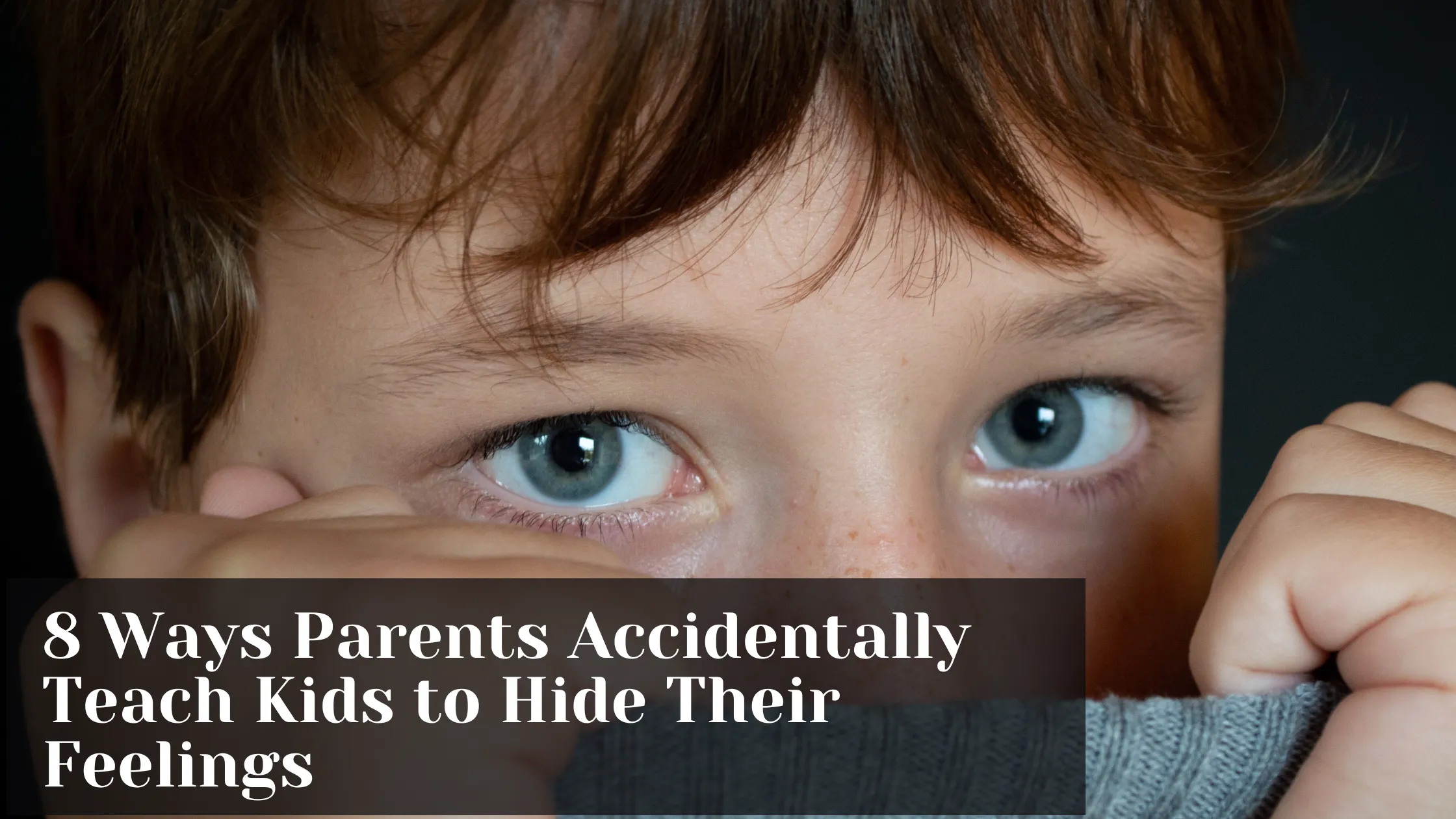
Your six-year-old comes home from school with tears streaming down her face. “Emma said she doesn’t want to be my friend anymore,” she sobs, her little body shaking with the kind of heartbreak that only a child experiencing their first rejection can feel. You love her desperately. You can’t stand to see her in pain. So you do what seems most helpful in the moment: “Oh sweetie, don’t cry. I’m sure she didn’t mean it. You’ll make lots of new friends! Let’s get you some ice cream and you’ll feel better.”
She stops crying. You feel like you’ve helped. But what really just happened? You accidentally taught her that sadness is something to be fixed quickly, that uncomfortable feelings should be pushed aside, and that ice cream is a better solution than actually feeling her emotions.
Or maybe it’s this: Your teenager storms into the house after soccer practice, throws his backpack against the wall, and yells, “I hate Coach! This is so unfair!” Your immediate response: “Hey! We don’t talk like that in this house. Go to your room until you can calm down and speak respectfully.” He goes to his room, shuts down emotionally, and you think the issue is resolved. But what he learned is that anger isn’t acceptable, that his feelings don’t matter as much as your rules, and that coming to you with big emotions leads to punishment.
Sound familiar? If so, you’re not alone. Most parents are genuinely well-meaning, loving, and want the best for their children. But we’re often accidentally teaching our kids to hide their feelings through subtle patterns of what researchers call “emotion dismissing”—and most of us have no idea we’re doing it.
The Science of Emotion Socialization
Before we explore the specific ways this happens, let’s talk about what’s really at stake. Because this isn’t just about hurt feelings in the moment—it’s about how children develop lifelong patterns of emotional regulation and expression.
Research published in February 2025 defines parental emotion socialization as parents’ beliefs about emotions, how parents respond to children’s expression of emotion, discuss emotion with children, and express emotion themselves. Psychologists Gottman and colleagues describe this as parents’ “meta-emotion philosophy”—their thoughts, beliefs, and attitudes about their own and their children’s emotions—which impacts parenting in ways that can be described as either emotion coaching or emotion dismissing.
A 2023 meta-analysis examining 49 studies with 24,524 participants found that unsupportive emotion socialization—including dismissing, invalidating, and punishing children’s emotions—significantly contributes to emotional dysregulation and internalizing symptoms like anxiety and depression in children. The research showed that parental dismissing, invalidation, and punishment of children’s emotions heighten emotional arousal and dysregulation. Through these parenting behaviors, children learn that negative emotions are inappropriate and should be avoided and minimized, which undermines healthy emotional development.
The consequences extend far beyond childhood. Research from July 2022 found that if a child routinely had their reality dismissed, minimized, or denied, they struggle with identifying or expressing their emotions as adults. They may become emotionally unavailable and struggle to form or keep intimate relationships when emotional vulnerability is on the line.
What makes this particularly challenging is that many of these patterns are invisible. They’re not about overt abuse or neglect—they’re about subtle, everyday responses that communicate powerful messages about which emotions are acceptable and which aren’t.
Let’s look at the eight most common ways loving parents accidentally teach children to hide their feelings.
8 Ways We Accidentally Teach Emotional Hiding
1. Immediately Trying to Fix or Stop the Feeling
This is perhaps the most common pattern, and it comes from the most loving place: we can’t stand to see our children in pain, so we rush to make it better.
What this looks like:
- “Don’t cry, you’re okay!”
- Immediately offering solutions before acknowledging the emotion
- Distracting from the feeling with treats, screens, or activities
- Rushing to reassure: “It’s not that bad” or “You’ll feel better soon”
- Moving quickly past the emotion to the “lesson” or “silver lining”
According to a 2024 study on emotional validation, children who received emotional validation feedback exhibited significantly higher levels of persistence on frustrating tasks compared to those who received emotional invalidation or no feedback. The study defined emotional validation as “the acceptance of emotions without judgment”—essentially, allowing the emotion to exist before trying to change it.
Why this happens: We’re uncomfortable with our children’s difficult emotions. When they’re sad, anxious, or angry, it activates our own nervous systems. We feel helpless, distressed, or triggered by our own childhood experiences with those emotions. So we try to make the feeling go away as quickly as possible.
What children learn: Difficult emotions are problems to be solved immediately rather than experiences to be felt and processed. They learn that you can’t handle their big feelings, so they’d better not bring them to you. They develop the belief that uncomfortable emotions are dangerous and must be avoided.
What to do instead: Practice sitting with the emotion before trying to fix it. Say something like, “You’re really sad right now. That makes sense. Tell me more about what happened.” Let there be a pause. Let the emotion exist. Only after they feel heard should you move to problem-solving—and then, do it collaboratively: “What do you think might help?”
2. Minimizing or Comparing Their Pain
When we tell children their problems aren’t that serious—especially compared to others’ problems or to adult problems—we’re teaching them that their emotional experiences don’t matter.
What this looks like:
- “At least it’s not as bad as…”
- “Other kids have it so much worse”
- “When I was your age, I dealt with way bigger problems”
- “That’s nothing to be upset about”
- “You think this is hard? Wait until you’re an adult!”
- “You’re too young to be stressed”
Why this happens: We’re trying to provide perspective. We genuinely believe that helping children understand their problems are relatively minor will comfort them. We think we’re teaching resilience and gratitude.
What children learn: Their feelings are wrong, exaggerated, or invalid. They should be ashamed for being upset about “small” things. If they’re struggling with something that others handle easily, something must be wrong with them. Over time, they learn to question and dismiss their own emotional experiences.
A January 2023 Psychology Today article on emotional neglect explains that parents who actively invalidate their child have misconceptions of how emotions work overall. They may view feelings as something you choose to experience or label emotions as “bad behavior” that must be fixed. These parents may be aware of their invalidating nature yet may lack the knowledge to know this is inherently wrong.
What to do instead: Validate that their experience is real and difficult for them, regardless of how it compares to others: “This is really hard for you right now.” Remember: pain is not a competition. Just because someone else’s pain might be “worse” doesn’t make your child’s pain any less real or worthy of compassion.
3. Punishing or Sending Them Away for Emotional Expression
When we respond to children’s big emotions with punishment, isolation, or demands that they “calm down” before they’re allowed back, we’re teaching them that emotions themselves are the problem.
What this looks like:
- “Go to your room until you can behave”
- “I don’t want to see you until that attitude is gone”
- “No dessert/screen time because of how you acted”
- Time-outs specifically for expressing emotions (rather than for aggressive behavior)
- Making affection or attention conditional on emotional control
Research published in July 2020 describes how a child who is sent to their room each time they exhibit a negative emotion learns that their own negative emotions are intolerable and bad. A child who is actively punished for showing anger learns that their angry feelings are a danger and an unacceptable offense against others.
Why this happens: We’re at the end of our rope. Their big emotions trigger our own dysregulation. We feel disrespected or manipulated. We believe that consequences will teach them to control their emotions better. We’re replicating patterns from our own childhoods.
What children learn: Emotions—particularly negative ones—are unacceptable. They must hide how they really feel in order to maintain your love and approval. The message becomes: “I love you when you’re happy and compliant. When you’re angry, sad, or overwhelmed, you’re not welcome.”
A study examining the intergenerational transmission of emotion dysregulation found that parent invalidation of emotions—including both punishment and neglect of emotional expression—was associated with higher levels of adolescent emotion dysregulation, which in turn related to increased internalizing and externalizing behaviors.
What to do instead: Separate the emotion from the behavior. “I can see you’re really angry right now. Anger is okay. Hitting is not okay. Let’s figure out a better way to show your anger.” Help them stay present with the emotion while teaching appropriate expression. Connection before correction.
4. Using Distraction as the Primary Emotional Coping Strategy
Distraction has its place, but when it becomes our default response to children’s difficult emotions, we’re teaching them to avoid rather than process their feelings.
What this looks like:
- Immediately putting on a show when they’re upset
- “Let’s not think about that—want to play a game?”
- Using food to soothe emotions consistently
- Changing the subject whenever emotions get uncomfortable
- Keeping children constantly busy to avoid emotional downtime
Why this happens: Distraction works in the short term. The child stops crying, we feel relief, and we can move on with our day. It seems kind—we’re helping them feel better. And sometimes, strategic distraction is appropriate, especially for younger children who can’t yet process complex emotions verbally.
What children learn: Uncomfortable feelings should be escaped rather than experienced. They don’t develop the capacity to sit with difficult emotions, which means as adults, they’ll reach for external regulation (substances, food, shopping, constant busyness) rather than processing emotions internally.
According to research on emotion socialization from February 2025, how parents respond to their children’s emotions—for example by either dismissing or encouraging expression—shapes how children regulate their emotions. When parents model avoidance through constant distraction, children learn that emotions are something to run from rather than move through.
What to do instead: Make distraction one tool in a larger toolkit, not the only tool. First, acknowledge the emotion: “I can see this is really bothering you.” Then, decide together if they need to process it or need a break from it. Sometimes saying “This feels too big right now—let’s take a break and come back to it” teaches healthy temporary distraction as a regulation strategy, rather than permanent avoidance.
5. Dismissing Emotions as “Drama” or Overreacting
When we label children’s emotional expressions as excessive, attention-seeking, or manipulative, we’re teaching them to question the validity of their own experiences.
What this looks like:
- “Stop being so dramatic”
- “You’re being too sensitive”
- “You’re making a big deal out of nothing”
- Eye-rolling, sighing, or other dismissive body language
- “Here we go again” or “Not this again”
- Accusing them of trying to get attention or manipulate
Research from January 2024 defines parental invalidation as the act of minimizing, dismissing, or denying a child’s thoughts, feelings, or experiences. It can be intentional or unintentional, but it has lasting negative impact on a child’s emotional and psychological development.
Why this happens: Their emotional response feels disproportionate to the situation (to us, as adults with different perspective and coping skills). We’re tired of repeated meltdowns over what seem like small issues. We worry that validating “overreactions” will encourage more of them.
What children learn: Their emotional responses are wrong or defective. They’re “too much.” They learn to doubt their own perceptions and feelings, leading to difficulty trusting their emotions as adults. They may also learn that to get your attention, they need to escalate further—creating the very pattern you’re trying to stop.
A 2024 study examining emotion validation found that children who received emotional validation—defined as acceptance of emotions without judgment—showed increased persistence, while those who received invalidation did not differ from those who received no feedback at all. Invalidation doesn’t teach better emotional control; it teaches emotional suppression.
What to do instead: Remember that the intensity of a child’s emotion is determined by their developmental stage, past experiences, and current capacity—not by your adult assessment of the situation’s seriousness. Validate first: “This is really upsetting to you.” Then gently help them develop perspective after they feel heard.
6. Only Praising or Paying Attention to Positive Emotions
When we only engage deeply with our children when they’re happy and withdraw or minimally respond when they’re struggling, we’re teaching them that only certain emotions are acceptable.
What this looks like:
- Enthusiastic engagement when they’re happy and excited
- Brief, perfunctory responses when they’re sad or anxious
- More patience and warmth with positive emotions
- Discomfort or awkwardness around negative feelings
- Implicitly (or explicitly) preferring when they’re “easy” and happy
Why this happens: Positive emotions are easier and more enjoyable to be around. We’re wired to seek pleasure and avoid pain—both in ourselves and our children. We may not even consciously realize we’re responding differently.
What children learn: “I’m more lovable when I’m happy. My parents prefer me when I’m not struggling. To maintain their love and approval, I need to hide difficult emotions and present as happy even when I’m not.”
Research on emotion socialization patterns from April 2023 found that children of parents with an emotion dismissing pattern were at greater risk for mental health problems and lower emotion competence compared to children of parents with emotion coaching patterns.
What to do instead: Check yourself for consistency. Are you as present, patient, and engaged when your child is sad as when they’re joyful? Practice leaning in during difficult emotions rather than pulling back. Say things like: “I’m here with you in the hard feelings, not just the happy ones.”
7. Intellectualizing or Lecturing Instead of Empathizing
When children share emotions and we immediately respond with explanations, lessons, or logic rather than empathy, we’re teaching them that feelings need justification rather than acceptance.
What this looks like:
- “Let me explain why you shouldn’t feel that way…”
- Immediately jumping to the lesson: “This is why it’s important to…”
- Offering rational explanations for why their feeling is incorrect
- Turning every emotional moment into a teaching opportunity
- Responding to feelings with facts and logic
Why this happens: We’re problem-solvers. We think understanding the situation intellectually will resolve the emotional response. We’re uncomfortable sitting in emotion without “doing” something productive. We want to make sure they “learn” from the situation.
What children learn: Emotions need to be justified or explained away. Feelings aren’t as important as thoughts. They learn to intellectualize and rationalize their emotions rather than actually feeling and processing them.
What to do instead: Lead with empathy and connection. After they feel heard and understood, there may be space for gentle teaching—but only after. The formula is: Connection → Emotional processing → Lesson, not Lesson → Lesson → More lesson.
8. Hiding or Suppressing Your Own Emotions
Children learn more from what we do than what we say. When we consistently hide our own emotions, pretend everything is fine when it’s not, or suppress our feelings in front of our children, we’re modeling emotional hiding.
What this looks like:
- Never crying or expressing vulnerability in front of children
- Pretending you’re not upset when you clearly are
- Hiding stress, worry, or sadness behind a constant smile
- Saying “I’m fine” when you’re obviously not
- Never talking about your own emotional experiences
Research published in April 2025 found that caregivers with greater adverse childhood experiences—who likely learned to suppress their own emotions—reported greater frequency of child disruptive behavior. The study also found that greater emotion coaching was associated with greater emotion dismissing, suggesting caregivers use a combination of both because they haven’t fully integrated healthy emotional expression themselves.
Why this happens: We think we’re protecting them from our problems. We believe children should be shielded from adult struggles. We don’t want to burden them or model “weakness.” We’re replicating patterns from our own childhoods where emotions weren’t discussed.
What children learn: Adults don’t have feelings, or if they do, they hide them. Showing vulnerability is weakness. The implicit message: “If even adults can’t show emotions, they must really be dangerous or shameful.”
What to do instead: Model healthy emotional expression. Share age-appropriate struggles: “I’m feeling frustrated right now because work was really stressful today. I’m going to take a few deep breaths to help myself calm down.” Let them see you process emotions, regulate yourself, and move through difficulty. This teaches them that emotions are normal, manageable, and part of being human.
The Long-Term Cost of Emotional Hiding
When children learn to hide their feelings, the effects ripple throughout their entire lives. Research from 2002 found that a history of childhood emotional invalidation was associated with chronic emotional inhibition in adulthood—including ambivalence over emotional expression, thought suppression, and avoidant stress responses. In turn, emotional inhibition significantly predicted psychological distress, including depression and anxiety symptoms.
Children who learn to hide their feelings often become adults who:
- Struggle to identify and name their own emotions
- Have difficulty with intimate relationships that require vulnerability
- Experience anxiety and depression from suppressed emotions
- Use maladaptive coping strategies like substance use, compulsive behaviors, or emotional eating
- Struggle to advocate for their needs or set boundaries
- Have children of their own and repeat the cycle
According to a January 2024 article on parental invalidation, constant invalidation can lead children to doubt their self-worth and abilities, struggle to understand and trust their feelings, have difficulty with emotional regulation, suppress their emotions, and experience higher rates of depression, anxiety, and other mental health disorders.
Breaking the Cycle: Becoming an Emotion Coach
The good news is that these patterns can change. Researchers identify two distinct approaches to children’s emotions: emotion dismissing and emotion coaching. You can shift from one to the other with awareness and practice.
A June 2024 study examining an emotion-focused parenting program found that parents who learned emotion coaching showed large reductions in emotion dismissing and distressed reactions to children’s negative emotions. The program was highly acceptable to parents and showed improvements in parenting practices, beliefs, parental emotion regulation, and children’s self-regulation.
What emotion coaching looks like:
Awareness: Notice and name emotions in yourself and your child Acceptance: Treat all emotions as valid and important information Empathy: Connect with your child’s emotional experience before trying to change it Validation: Communicate that their feelings make sense, even if the behavior doesn’t Teaching: Help them understand emotions, develop vocabulary, and learn regulation strategies Problem-solving: After the emotion is validated, work together on solutions
Practical steps to start today:
Check your own relationship with emotions. What emotions were acceptable in your childhood? Which weren’t? How does this impact how you respond to your child? Working on your own emotional awareness and regulation is the foundation for helping your child develop theirs.
Practice the pause. When your child expresses a difficult emotion, take a breath before responding. Notice your own reaction. Choose a response rather than reacting automatically.
Validate before you educate. Make “I can see this is really hard for you” your default first response. Only after your child feels heard should you move to teaching, problem-solving, or limit-setting.
Expand your emotional vocabulary together. Help children develop nuanced language for emotions. Instead of just “mad,” explore frustrated, annoyed, disappointed, betrayed. The more precisely they can name emotions, the better they can regulate them.
Create regular opportunities for emotional connection. Don’t wait for crisis moments. Build in daily check-ins: “How was your day? What felt hard? What felt good?” This normalizes emotional discussion.
Model what you want to see. Share your own emotional experiences appropriately. Let them see you feel, regulate, and move through emotions in healthy ways.
Repair when you mess up. You will have moments when you dismiss, minimize, or respond poorly to your child’s emotions. When this happens, go back and repair: “Earlier when you were upset and I told you to just get over it, that wasn’t fair. Your feelings matter. Can we talk about what happened?”
The Deeper Truth About Emotional Coaching
If there’s one thing I want you to take away from this, it’s that teaching children to express their emotions isn’t about raising children who never get upset or who are constantly sharing every feeling. It’s about raising children who trust their internal experience, who know emotions are information rather than emergencies, and who have the tools to process feelings in healthy ways.
This doesn’t mean you accept all behavior. Emotions are always valid; behavior isn’t always acceptable. “You’re angry—I get it. Hitting is not okay. Let’s find a better way to show your anger” validates the feeling while maintaining boundaries around behavior.
It doesn’t mean you’re available 24/7 for every emotional need. You can say, “I can see you’re upset. I need to finish this call, but in five minutes, I’ll be able to give you my full attention.” This teaches them that emotions matter AND that other people have needs too.
And it doesn’t mean you never help them shift out of difficult emotions. After validation and processing, it’s completely appropriate to help them develop strategies for managing emotions: “What usually helps when you feel this way? Should we take a walk, draw, or talk it through?”
Moving Forward with Compassion
If you’re reading this and recognizing patterns in yourself, take a breath. Guilt doesn’t help anyone. Most of us are replicating patterns from our own childhoods while simultaneously trying to do better. That’s the work of breaking generational cycles, and it’s hard.
Your children don’t need you to be perfect at this. They need you to be willing to learn, to repair when you mess up, and to gradually create more space for emotions in your family. Every time you validate instead of dismiss, every time you sit with a feeling instead of fixing it, every time you model healthy emotional expression—you’re building their capacity for emotional intelligence and mental health.
Remember: it’s never too late to change these patterns. Whether your children are toddlers or teenagers, they will benefit from your increasing emotional attunement. And the ripple effects extend beyond your own family—you’re also breaking patterns that might have existed for generations.
Your willingness to look at these patterns and do the hard work of changing them? That’s love in action. That’s the kind of parenting that changes lives.
Which of these patterns resonated most with you? Have you caught yourself accidentally teaching your child to hide their feelings? Share your experience in the comments below. Sometimes just naming these patterns helps us change them.
And if this post gave you new insight into emotional socialization, please share it with another parent. We’re all learning to do this better. We’re all trying to raise emotionally healthy children in a world that often dismisses feelings. Every parent who becomes more emotionally attuned creates a safer world for children to be fully, authentically themselves.