
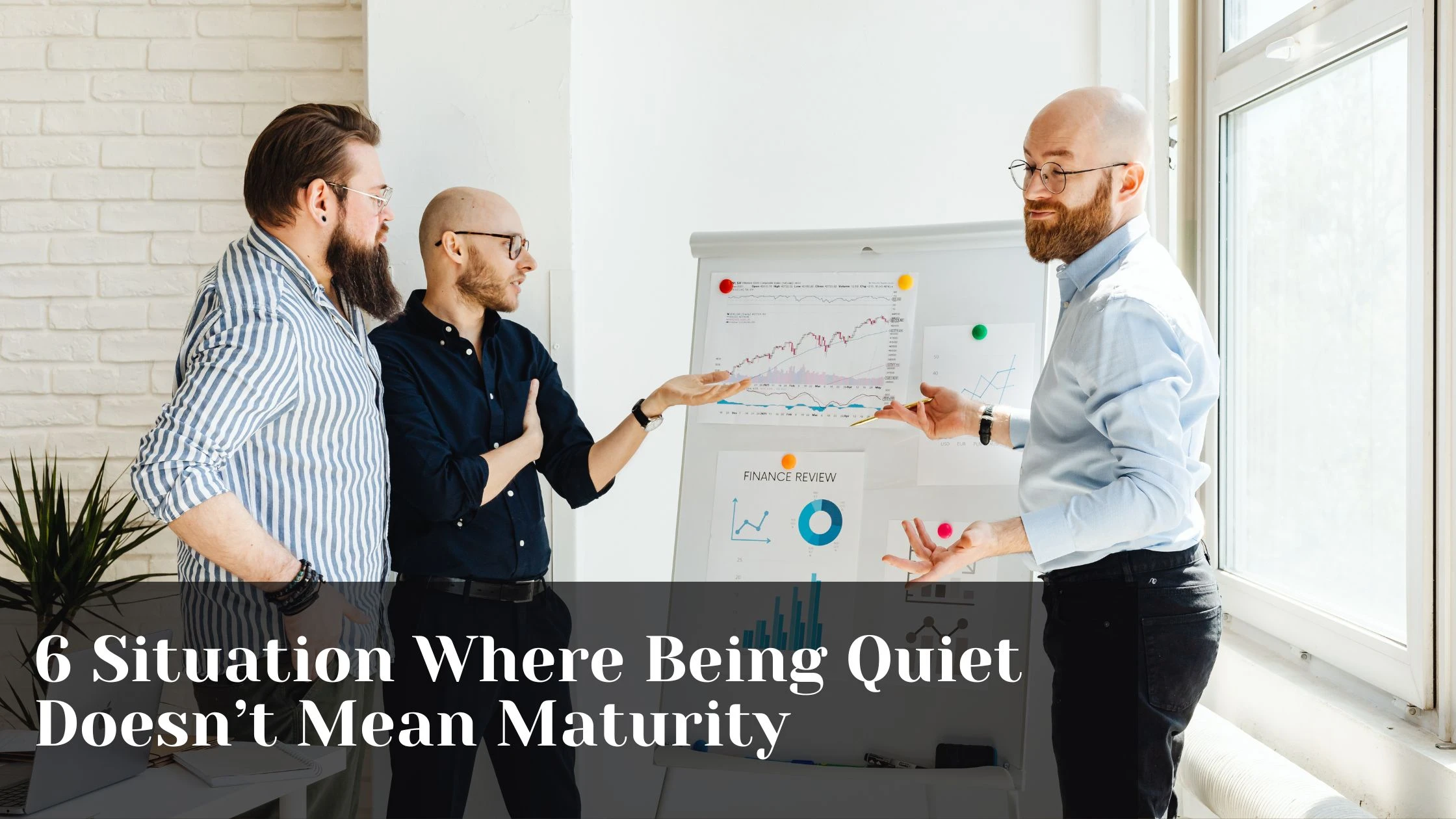
The colleague across the table says nothing while everyone else debates the proposed timeline. When asked directly for their opinion, they offer a noncommittal shrug and murmur, “Whatever works for everyone else.” Later, someone describes this person as “so mature—never getting caught up in office drama, always staying above the fray.”
But watch what happens after the meeting. They corner someone in the hallway to complain about the decision. They send passive-aggressive emails questioning the plan. They quietly sabotage the project through strategic non-cooperation. The silence that looked like maturity was actually something else entirely.
Somewhere along the way, staying quiet became conflated with emotional maturity. The loudest voice in the room is labeled immature, reactive, unable to control themselves. Meanwhile, the silent person gets praised for restraint, wisdom, taking the high road. But silence isn’t always golden. Sometimes it’s yellow.
The Cultural Elevation of Silence
Different cultures view silence through dramatically different lenses. Research published in 2025 examining silence across cultures found that in many Asian countries and northern European nations, silence is viewed as a virtue, a sign of respect and self-restraint. In Japan, Turkey, and China, minimal speech reflects refined manners, while excessive talk can be perceived as arrogance or superficiality.
Conversely, North American cultures—particularly the United States and Canada—tend to celebrate open dialogue and value freedom of speech. In these contexts, silence can be interpreted as problematic, even as a disability depending on the community. The right to remain silent is considered fundamental in many countries, yet in Western workplace settings, staying quiet during meetings often gets read as disengagement or lack of contribution.
A 2024 exploration of silence in communication notes that while some cultures associate silence with humility and prudence, others prioritize verbal expression. This cultural variation creates complexity when assessing whether someone’s silence represents maturity or something more problematic.
The challenge arises when cultural narratives around silence get weaponized to excuse dysfunctional behavior. The person who refuses to address legitimate concerns gets defended as “just not confrontational.” The partner who shuts down during conflict gets praised for “staying calm.” The colleague who withholds crucial information gets described as “private” or “professional.”
Understanding the difference between mature silence and dysfunctional silence requires looking beyond the surface behavior to the motivation, pattern, and impact.
The 6 Situations Where Silence Isn’t Maturity
1. Silent Treatment as Punishment: Weaponized Withdrawal
There’s a stark difference between taking space to regulate emotions and deploying silence as a weapon. The silent treatment—deliberately withholding communication to punish, control, or manipulate—represents one of the most destructive patterns in relationships, yet it often masquerades as maturity.
A 2026 systematic review examining the silent treatment in relationships analyzed multiple studies and found that when silence serves as “communication by withdrawal,” the lack of response itself becomes a message used to influence, protest, or punish when direct dialogue feels too threatening. The review noted that while giving the silent treatment to someone dislikable might help conserve self-regulatory resources, giving it to someone likable depletes cognitive and physical performance.
Psychologist John Gottman identified stonewalling—emotional withdrawal during conflict—as one of the “Four Horsemen of the Apocalypse” that predict relationship dissolution. Research on stonewalling shows it occurs when one partner emotionally withdraws, shutting down communication during conflicts. The emotional toll includes feelings of rejection, isolation, and growing resentment.
A 2024 study examining stonewalling and emotional loneliness in romantic relationships found that stonewalling—characterized by emotional withdrawal, silence, and avoidance during conflict—acts as one of the strongest predictors of marital dissolution. The research demonstrated that emotional loneliness partially mediated the relationship between stonewalling and sexual disengagement, suggesting that affective withdrawal erodes emotional intimacy, which undermines relationship satisfaction.
The key distinction: mature silence involves saying “I need time to process this before responding constructively.” Weaponized silence involves punishing someone through strategic withdrawal, creating emotional abandonment while claiming the moral high ground of “not engaging in drama.”
Studies show that 85% of stonewallers are men, and when women engage in stonewalling, it becomes particularly predictive of divorce. The silent treatment creates a demand-withdraw pattern where one partner wants to discuss issues while the other shuts down communication, often as a way to avoid dealing with problems, exercise control, get attention, or punish.
2. Conflict Avoidance Masquerading as “Picking Battles”
Some people pride themselves on “never fighting” in their relationships. They describe themselves as peacekeepers, people who don’t “sweat the small stuff,” mature enough to “let things go.” But underneath this narrative often lies pervasive conflict avoidance that prevents genuine intimacy and allows resentments to compound.
Research from 2025 on employee silence and psychological safety identified “defensive silence”—withholding information out of fear—as a pattern that restricts organizational communication and weakens interpersonal trust. This research demonstrated that fear of retaliation and ostracism lead people to avoid interactions that could make them vulnerable, thereby increasing defensive silence.
The same dynamic operates in personal relationships. When someone consistently stays quiet about their needs, concerns, or boundaries, they’re not demonstrating maturity—they’re avoiding the discomfort of potential conflict. This creates what researchers call “relational silence,” where people intentionally withhold ideas, information, and opinions to preserve relationships.
A 2025 study on interpersonal emotion regulation found that emotional safety allows partners to share feelings and emotions freely. When someone habitually avoids conflict, they prevent the vulnerability required for genuine connection. The relationship looks peaceful on the surface while slowly eroding underneath.
The pattern becomes particularly problematic when the conflict-avoidant person becomes resentful about issues they never voiced. They stay silent during the moment, then complain to others afterward. They agree to things they don’t want, then passively resist or sabotage. They maintain a pleasant facade while internally cataloging grievances.
Research published in 2026 examining silence patterns found that when withdrawal is followed by repair-oriented communication, it may facilitate reflection. However, when silence remains unresolved, it consolidates disconnection and chronic dissatisfaction. The transition from silence back to dialogue is critical for relationship health.
3. Withholding Information to Maintain Power
In organizational contexts, strategic silence often serves power maintenance rather than professional discretion. Someone has crucial information that could help the team but withholds it to maintain informational advantage. They know about a problem but stay quiet, allowing others to fail. They understand the real dynamics but let misunderstandings persist because correcting them would diminish their position.
A 2025 meta-analysis on burnout, employee silence and voice examined 84 studies involving 34,975 participants and found significant relationships between burnout and silence outcomes. Greater silence and lower voice were associated with higher burnout, with the relationship being statistically significant.
The research identified multiple forms of silence in workplaces: defensive silence (withholding input due to fear), acquiescent silence (passive acceptance based on resignation), and quiescent silence (withholding opinions to comply with norms). Each type serves different functions, but all can be used strategically to maintain power differentials.
Studies on psychological safety and silence found that environments where employees feel safe to express ideas promote more open communication and reduce defensive silence. However, when psychological safety is low, particularly in hierarchical organizations, silence becomes a tool for self-protection and strategic positioning.
The distinguishing factor: mature discretion involves knowing when information sharing serves the collective good versus when it violates confidentiality or trust. Power-maintaining silence involves hoarding information specifically to maintain advantage over others, even when sharing would benefit everyone.
Someone who consistently remains quiet during planning phases but speaks up to criticize after decisions are made, who withholds their expertise until others have struggled, or who uses “I knew that would happen” as their primary contribution isn’t demonstrating wisdom—they’re playing power games through strategic silence.
4. Refusing to Advocate for Legitimate Needs
Cultural messaging often conflates neediness with immaturity and self-sufficiency with maturity. This creates a dynamic where people feel they demonstrate maturity by never asking for help, never stating their needs, never “causing problems” by requiring anything from others.
Research examining silence behaviors in educational settings found that silence often originates from structural features that prioritize order and performance over dialogue and exploration. In Confucian pedagogical traditions, discipline and respect for authority are seen as prerequisites for learning, making silence a culturally sanctioned strategy to maintain harmony and avoid disapproval.
This same dynamic operates in workplaces and relationships. Someone stays quiet about unreasonable workloads because asking for help feels like admitting inadequacy. They don’t communicate their emotional needs in relationships because “mature people don’t need constant validation.” They never set boundaries because “grown-ups handle things without complaining.”
A 2025 study on workplace silence using sociometer theory found that defensive silence operates as a proactive strategy for managing interpersonal relationships. When workplace ostracism reduces organization-based self-esteem, employees increase their defensive silence to avert further damage to relationships. This creates a cycle where silence begets more isolation.
The research on employee voice and silence demonstrates that chronic silence—particularly around legitimate needs—correlates with emotional exhaustion, decreased well-being, and reduced organizational effectiveness. A 10-week longitudinal study found that the psychological climate for voice is crucial, improving voice and mitigating silence both within and across weeks.
Mature communication involves stating needs clearly and advocating for legitimate boundaries. Staying silent about needs doesn’t demonstrate self-sufficiency—it demonstrates fear of being seen as burdensome, which ultimately creates resentment and relational distance.
5. Passive Participation That Sidesteps Accountability
Some people have perfected the art of being present without being engaged. They attend meetings but contribute nothing. They’re physically in the room during family discussions but emotionally absent. They neither agree nor disagree, neither support nor oppose. Later, when things go wrong, they claim they were never really on board with the plan.
Research on classroom silence identified how students respond to authority with resistant or passive silence, especially when negative feedback undermines confidence. The study found that contextual rigidity—hierarchical relations, strict regulation, and evaluative control—creates environments where restraint becomes a rational and even rewarded response.
This pattern extends beyond classrooms. In relationships and organizations, passive silence allows people to avoid the vulnerability of having an opinion that might be challenged. They never commit to positions, which means they can never be wrong. They remain neutral on everything, which allows them to claim moral superiority regardless of outcomes.
A 2025 study examining digital silence as a pragmatic strategy found that silence is universally used but culturally interpreted differently. In Arabic-speaking groups, silence often conveys politeness or emotional overwhelm. In Western contexts, it may suggest avoidance. In East Asian cultures, it can indicate deference or restraint.
The challenge arises when silence serves primarily to sidestep accountability. The person who never votes, never takes a position, never commits to a course of action gets to maintain plausible deniability. When things work out, they were supportive all along. When things fail, they “always had concerns.”
Mature participation involves thoughtful contribution even when that means being vulnerable to criticism. Passive silence that avoids accountability represents risk aversion disguised as wisdom.
6. Silencing Others Through Strategic Non-Response
Perhaps the most insidious form of dysfunctional silence involves using non-responsiveness to control or diminish others. Someone sends repeated messages that go unanswered. Emails sit unread. Reasonable requests for feedback get ignored. The silence itself becomes a tool for communicating disregard.
Research on workplace ostracism and defensive silence found that workplace ostracism—including silent treatment, giving the cold shoulder, avoiding conversation or eye contact, and withholding needed information—dramatically impacts employees’ organization-based self-esteem. The study demonstrated that ostracism is inherently noninteractive, involving behaviors such as avoiding interaction or excluding individuals from conversations.
A 2008 study cited in the 2026 systematic review demonstrated that ostracism involving a romantic partner has particularly painful interpersonal meaning, as partners are typically expected to meet core needs such as belonging. When someone strategically withholds response, they communicate that the other person doesn’t warrant even basic acknowledgment.
This pattern appears in professional contexts when senior people ignore junior colleagues’ contributions, in social settings when someone deliberately excludes particular individuals from group conversations, and in intimate relationships when one partner uses selective responsiveness to train the other into compliance.
Research on the spiral of silence theory examined how environmental factors interact with psychological variables to influence willingness to express opinions. A 2025 study found that in social media environments, individuals with higher narcissism are more likely to speak regardless of opinion congruence, while communication apprehension significantly inhibits expression in face-to-face contexts.
The distinction between mature boundary-setting and strategic silencing lies in consistency and intent. Mature boundaries apply across relationships and situations based on principles. Strategic silencing targets specific people to maintain power, punish behavior, or avoid uncomfortable interactions while maintaining the appearance of being above conflict.
The Actual Markers of Maturity
Mature communication doesn’t necessarily look quiet. It looks responsive, clear, and constructive—which sometimes involves difficult conversations, direct advocacy, and visible engagement.
Emotionally mature people speak up about legitimate concerns while managing the tone and delivery. They engage in conflict when necessary while maintaining respect. They advocate for their needs without demanding others meet them in specific ways. They take positions knowing they might be challenged. They respond to others’ communications even when those communications are uncomfortable.
Research on emotional intelligence and psychological safety shows that psychological safety—characterized by self-efficacy, hope, resilience, and optimism—helps individuals better cope with relational stress. This psychological safety develops through consistent, honest communication, not through strategic silence.
The 2026 systematic review on silence concluded that chronic or repeated use of silence shifts from a short-term coping response to a maladaptive interpersonal pattern that undermines psychological safety, reduces problem-solving, and consolidates disconnection. The transition from silence back to dialogue is critical for relationship health.
When Silence Does Represent Maturity
Not all silence is dysfunctional. Mature silence exists and serves important functions: pausing before responding to regulate emotions and formulate thoughtful replies, choosing not to engage with bad-faith arguments or obvious manipulation, respecting confidentiality and appropriate boundaries around others’ information, recognizing when speaking would serve one’s ego rather than the situation, and creating space for others to process, reflect, or speak.
Research published in 2024 notes that active silence can simultaneously communicate, expand understanding, and prevent mistakes. People who speak perfectly control speech, but people who communicate perfectly control silence. The key is distinguishing between silence that serves connection and silence that prevents it.
The distinguishing factors typically involve:
Intent: Mature silence aims to facilitate better communication eventually. Dysfunctional silence aims to avoid, punish, or control.
Pattern: Mature silence is situational and temporary. Dysfunctional silence becomes the default response to discomfort.
Impact: Mature silence creates space for reflection that leads to deeper understanding. Dysfunctional silence creates distance that prevents connection.
Reciprocity: Mature silence exists in relationships with mutual respect and open communication. Dysfunctional silence exists in relationships with power imbalances and communication breakdowns.
Repair: Mature silence is followed by re-engagement. Dysfunctional silence remains unresolved, consolidating disconnection.
Breaking Patterns of Dysfunctional Silence
For people who recognize their own patterns of dysfunctional silence, change requires addressing the underlying fears and developing communication skills. Research on stonewalling prevention emphasizes that both partners need to work on emotional awareness and regulation skills to de-escalate conflict before becoming emotionally flooded.
The work involves learning to tolerate discomfort that comes with direct communication, developing skills for expressing needs and concerns constructively, examining how silence served protective functions in the past, building capacity to engage in conflict without becoming overwhelmed, and recognizing when silence serves avoidance versus genuine self-regulation.
For people on the receiving end of dysfunctional silence, the challenge involves not internalizing others’ withdrawal as evidence of their own inadequacy. Studies on emotional neglect in marriages found that marriages affected by emotional neglect exhibit dysfunctional communication cycles marked by avoidance, hostility, or misinterpretation of intent. When neglected partners attempt to restore emotional closeness and are met with defensiveness or stonewalling, this creates a self-perpetuating loop where silence begets silence.
The response to dysfunctional silence requires clear communication about its impact, setting boundaries around acceptable communication patterns, refusing to participate in silent treatment dynamics by maintaining one’s own healthy communication, and recognizing when patterns are entrenched enough to require professional intervention or relationship re-evaluation.
Reclaiming Mature Communication
The conflation of silence with maturity creates permission structures for dysfunctional behavior. When staying quiet gets praised regardless of motivation or impact, people avoid developing actual communication skills. They never learn to navigate conflict constructively, express needs directly, or engage in difficult conversations with respect and care.
True emotional maturity involves knowing when to speak and when to stay silent—and having the courage to do both when appropriate. It means tolerating the discomfort of difficult conversations rather than defaulting to avoidance. It means recognizing that sometimes the mature response is speaking up loudly and clearly about issues that matter.
Research examining workplace voice and silence over 10 weeks revealed positive reciprocal relationships between voice and psychological climate. Environments that support expression create more expression. Environments that punish or ignore expression create silence. The cultural climate matters tremendously.
Silence isn’t inherently mature or immature. It’s a communication choice that can serve connection or prevent it, facilitate understanding or block it, demonstrate wisdom or reveal fear. The maturity lies not in the volume of one’s voice but in the intention behind one’s choice to speak or stay silent, and the willingness to engage authentically regardless of which option serves the moment.
What patterns of silence have been observed in personal or professional relationships? When has staying quiet served connection, and when has it prevented it? Sharing observations in the comments might help others distinguish between mature silence and patterns worth examining.
If this perspective resonates, consider sharing it with someone who might benefit from questioning whether their silence truly serves them. Sometimes the most important conversation is the one about why conversations aren’t happening.