
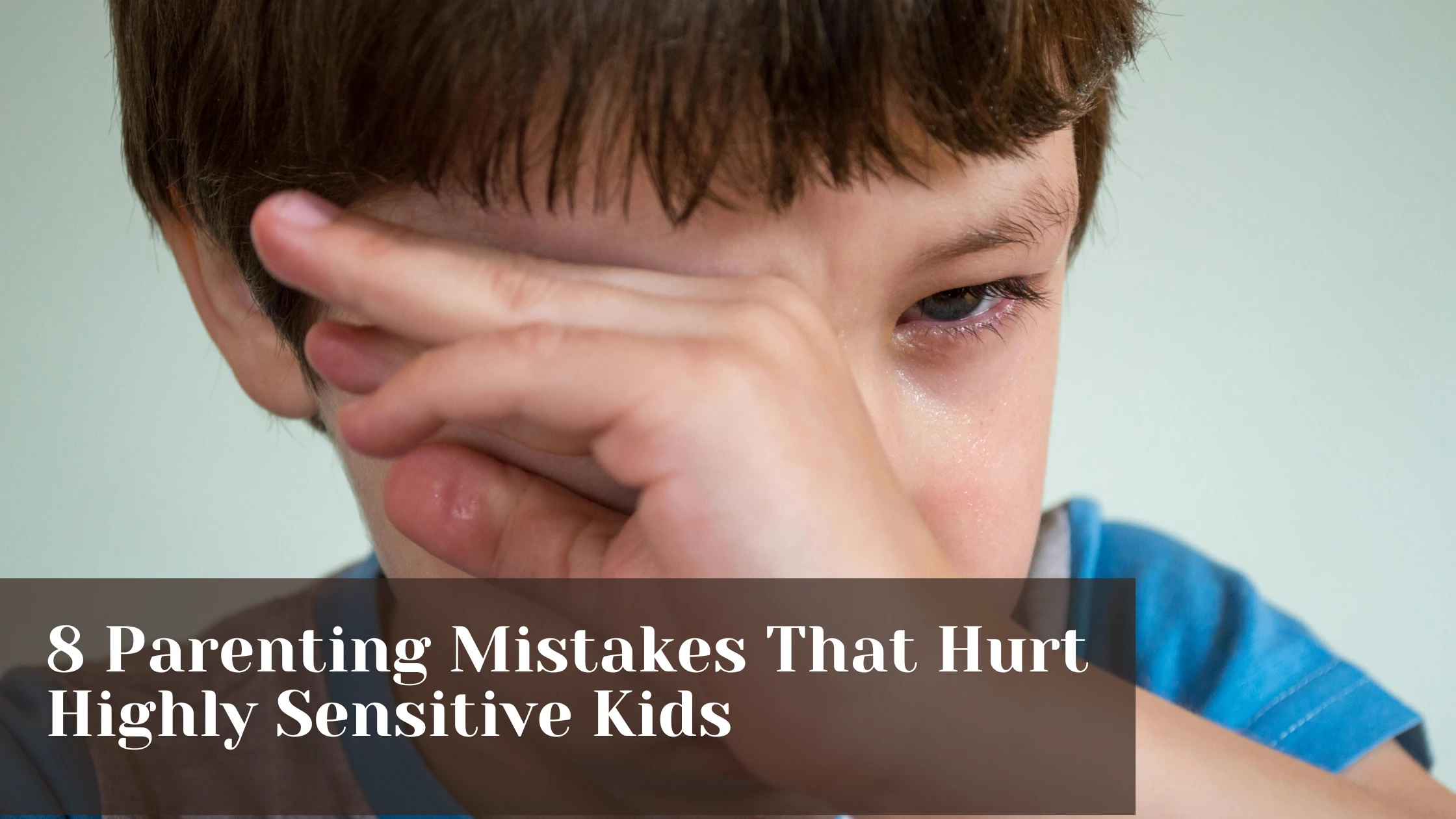
Your highly sensitive eight-year-old comes home from school upset because another child made fun of their art project. You want to help, so you say what feels supportive: “You’re being too sensitive. It’s not worth getting upset over. You need to develop thicker skin or kids will keep bothering you.”
You meant well. You’re trying to prepare them for a world that won’t always accommodate their sensitivity. But what you don’t realize is that you’ve just confirmed your child’s deepest fear: that there’s something wrong with them. That their natural way of experiencing the world is a flaw that needs fixing.
Here’s the uncomfortable truth that decades of research have revealed: The parenting approaches that work reasonably well for many children can be actively harmful to highly sensitive children. These aren’t children who just need to “toughen up”—they have fundamentally different nervous systems that process information more deeply and react more strongly to environmental input. And when parents don’t understand this difference, even well-intentioned parenting can cause lasting damage.
Understanding What Makes Sensitive Children Different
Before exploring the specific mistakes, we need to understand what we’re actually dealing with. In 1997, psychologist Elaine Aron published landmark research identifying “sensory processing sensitivity” as a distinct temperament trait found in 15-20% of the population. This isn’t a disorder, diagnosis, or something that needs to be cured—it’s a fundamental difference in how the nervous system processes information.
A 2018 longitudinal study following kindergartners found something crucial: highly sensitive children are more affected by their environments than other children—in both directions. When parenting was harsh or negative, sensitive children showed significantly more behavioral problems than their less sensitive peers. But when parenting was warm and supportive, sensitive children showed fewer problems and better outcomes than even non-sensitive children in positive environments.
This pattern has been confirmed across multiple studies. Research from 2020 examining three different environmental sensitivity models found that highly sensitive children are differentially susceptible—meaning they respond more strongly to both positive and negative parenting influences. A 2019 observer-rated study confirmed that sensitive children are more negatively affected by high levels of negative parenting and more positively influenced by high levels of positive parenting.
Translation: For highly sensitive children, parenting quality matters more. The stakes are higher. Mistakes that might have minor effects on other children can have profound, lasting impacts on sensitive children.
The 8 Mistakes That Cause the Most Harm
1. Telling Them They’re “Too Sensitive” or Need to “Toughen Up”
This might be the single most damaging thing you can say to a highly sensitive child, yet it’s one of the most common responses. When you tell a child that their fundamental way of experiencing the world is wrong, you’re not building resilience—you’re building shame.
Research on sensitivity and parenting quality published in 2020 found that highly sensitive children whose temperament was treated as a problem to be fixed showed significantly higher rates of anxiety, depression, and behavioral problems compared to sensitive children whose sensitivity was accepted as a normal variation of temperament.
What this looks like:
- “You’re being too sensitive” when they cry about something that upsets them
- “You need to toughen up” when they struggle with overstimulating situations
- “Stop being so dramatic” when they have strong emotional reactions
- “Why can’t you be more like your brother/sister?” when comparing them to less sensitive siblings
Why this is so damaging: Sensitive children already receive messages from the world suggesting they’re overreacting or that something is wrong with them. When this message comes from their own parents—the people who are supposed to validate and protect them—it becomes internalized as deep shame about their core self.
A 2022 study on rumination in highly sensitive children found that sensitive children who experienced invalidation of their temperament developed significantly higher levels of ruminative thinking and depressive symptoms. The message that “you’re too sensitive” teaches them to distrust their own perceptions and feelings—a pattern that undermines mental health for years to come.
The alternative: Reframe sensitivity as a neutral characteristic with both gifts and challenges. “You feel things deeply. That’s part of who you are, and it comes with some wonderful qualities like your empathy and creativity. It also means we need to help you manage intense feelings and overstimulation.”
2. Using Harsh or Aggressive Discipline Approaches
What counts as “harsh” varies dramatically depending on the child. A parenting approach that one child might shrug off can be traumatizing to a highly sensitive child whose nervous system processes threats and negative emotions more intensely.
Research examining environmental sensitivity markers found that from middle childhood onwards, sensitive children exposed to harsh parenting became exclusively vulnerable to negative experiences—they lost the capacity to benefit from positive experiences because the negative ones had such disproportionate impact.
What harsh discipline looks like for sensitive children:
- Yelling or raised voices (which sensitive children experience as more threatening than other children do)
- Physical punishment, which research shows affects sensitive children more negatively than their peers
- Harsh criticism or shaming
- Isolation as punishment (time-outs in scary or lonely spaces)
- Unpredictable consequences that keep them in a state of anxiety
Why this backfires: Studies from 2020 found that highly sensitive children are at greater risk to develop behavioral problems when experiencing harsh parenting compared to less sensitive children. But they also do exceptionally well when parents provide warm caregiving combined with sensitive disciplinary strategies.
A 2023 longitudinal study examining environmental sensitivity and depression found that permissive parenting without clear boundaries also predicted worse outcomes for sensitive children. They need structure and limits—but delivered with warmth, consistency, and respect for their heightened reactivity to negative feedback.
The alternative: Use gentle but firm discipline that provides clear expectations and consistent consequences without harshness. Explain the reasons behind rules. Give warnings before transitions. Focus on teaching rather than punishing. Validate their feelings while still maintaining boundaries.
3. Dismissing or Minimizing Their Emotional Experiences
“You’re fine.” “It’s not that big of a deal.” “You’ll get over it.” “You’re overreacting.” These phrases roll off many parents’ tongues automatically when children are upset. But for highly sensitive children, this kind of emotional dismissal is profoundly invalidating.
Research on highly sensitive child parenting from 2024 emphasizes that sensitive children feel things more deeply and process emotional experiences more thoroughly than their peers. When parents dismiss these genuine experiences, children learn that their internal reality can’t be trusted.
What dismissal looks like:
- Telling them they shouldn’t feel what they’re feeling
- Comparing their reactions unfavorably to other children’s
- Rushing to fix feelings instead of acknowledging them
- Becoming frustrated when they can’t “just let it go”
- Treating their emotional depth as inconvenient or problematic
The developmental impact: A 2020 study examining parenting and highly sensitive children found that parents high in sensory processing sensitivity themselves sometimes struggle with their children’s emotions because they find them overwhelming. When parents can’t handle their child’s emotional intensity, they often resort to dismissal—which then becomes a risk factor for the child developing anxiety and depression.
Research from 2022 on environmental sensitivity and rumination found that highly sensitive children whose emotions were consistently dismissed developed higher levels of rumination (repetitive negative thinking) and depressive symptoms. The dismissal taught them that their feelings were wrong, but the feelings didn’t go away—they just went underground, where they festered.
The alternative: Validation doesn’t mean agreement—it means acknowledgment. “This is really upsetting you, I can see that” or “You’re having big feelings about this” validates their experience without requiring you to fix it or agree that the response was proportionate.
4. Forcing Them Into Overstimulating Situations Without Support
Birthday parties with dozens of screaming children. Loud concerts or crowded events. Busy schedules with no downtime. For many children, these are challenging but manageable. For highly sensitive children, they can be genuinely overwhelming—yet parents often push them into these situations without support, believing they need exposure to “get used to it.”
Research on sensory processing sensitivity shows that one of the core features is being more easily overstimulated. This isn’t a preference or a character weakness—it’s a nervous system that processes more deeply and therefore reaches capacity sooner than others.
What forced exposure looks like:
- Making them attend events that you know will overwhelm them without any exit strategy
- Scheduling too many activities without building in recovery time
- Insisting they participate in loud, chaotic activities to “build character”
- Dismissing their needs for quiet, downtime, or less stimulation
- Punishing them when they become dysregulated from overstimulation
Why this approach fails: Studies from 2018 show that sensitive children don’t adapt to harsh environments by becoming less sensitive—they develop anxiety, behavioral problems, and coping difficulties instead. Forced exposure without support teaches them that their needs don’t matter and that they should push through distress signals from their nervous system.
Research from 2025 on parenting highly sensitive children emphasizes that these children can easily become overwhelmed by chaos or too much stimulation. Creating calm, structured environments with predictable routines helps them feel secure and reduces anxiety.
The alternative: Prepare them for challenging situations, provide tools for managing overstimulation (noise-canceling headphones, quiet breaks, earlier exit), respect their limits, and build in recovery time. Challenge should be gradual and supported, not forced and overwhelming.
5. Comparing Them to Less Sensitive Siblings or Peers
“Why can’t you be more like your sister? She doesn’t get upset about things like this.” “Other kids don’t have such a hard time with birthday parties.” “Your brother played the same sport at your age and loved it.”
These comparisons might seem motivating to parents, but they’re crushing to sensitive children who already feel different and often wonder if something is wrong with them.
Research examining environmental sensitivity in families found that about 20-35% of children fall into the high sensitivity group, meaning most families have a mix of sensitivity levels among siblings. When parents fail to recognize that children with different temperaments need different approaches, they often inadvertently favor one temperament while making the other feel inadequate.
What harmful comparisons look like:
- Using a less sensitive sibling as the standard all children should meet
- Praising other children for handling things the sensitive child struggles with
- Creating a family narrative where the sensitive child is “the difficult one”
- Asking why they can’t just be different than they are
- Showing frustration that they require different parenting approaches than siblings
The shame spiral: Highly sensitive children are already aware that they’re different. Studies show they notice subtle differences in how they react compared to peers. When parents highlight these differences negatively through comparison, it confirms the child’s fear that being sensitive makes them inferior or broken.
A 2020 study on parenting highly sensitive adolescents found that parents who couldn’t accept their child’s sensitivity often used more psychologically intrusive parenting—including unfavorable comparisons—which predicted worse adjustment outcomes for the sensitive adolescents.
The alternative: Recognize that different temperaments have different needs and different gifts. Celebrate what makes each child unique rather than using one as a standard against which others are measured. “Your sister loves loud parties. You prefer smaller gatherings. Both are okay.”
6. Failing to Provide the Structure and Predictability They Need
Here’s a paradox: highly sensitive children need both flexibility (to accommodate their overwhelm) and structure (to feel secure). When parents misunderstand sensitivity as requiring constant accommodation without structure, they create chaos that makes the child’s anxiety worse.
Research from 2025 emphasizes that sensitive children do better when things are predictable. They need to know what to expect, what the rules are, and what will happen in different situations. Without this structure, their tendency toward deep processing turns into anxious rumination about uncertainties.
What lack of structure looks like:
- Constantly changing schedules and routines without warning
- Inconsistent rules or consequences
- Permissive parenting with no clear boundaries
- Making decisions erratically based on parent mood rather than clear guidelines
- Last-minute changes without preparation or explanation
Why this is particularly harmful for sensitive children: A 2022 study examining permissive parenting and sensitive children found that internalizing problems were greatest among environmentally sensitive children exposed to high levels of permissive parenting. These children process information deeply and notice inconsistencies acutely—without clear structure, they become anxious trying to predict what will happen.
Research from 2020 examining different parenting styles found that sensitive children benefited most from authoritative parenting—high warmth combined with clear, consistent expectations. They need the emotional support sensitivity requires but also the structure that allows their deep-processing minds to feel secure.
The alternative: Create predictable routines, communicate expectations clearly, maintain consistent boundaries with warm delivery, prepare them for changes in advance, and explain the logic behind rules so their deep-processing minds can understand the framework.
7. Not Teaching Them About Their Sensitivity or How to Manage It
Many parents avoid labeling their child as “sensitive” thinking it will create a self-fulfilling prophecy or give them an excuse for difficult behavior. But without understanding their own temperament, sensitive children often conclude something is fundamentally wrong with them.
Research from 2018 on the development of the Highly Sensitive Child scale identified three distinct sensitivity groups: low (25-35%), medium (41-47%), and high (20-35%). For children in that high group, understanding they’re part of a normal variation in temperament—not broken or defective—is crucial for healthy development.
What this mistake looks like:
- Never explaining why they experience things differently than peers
- Avoiding the word “sensitive” as if it’s something shameful
- Not teaching them strategies for managing their specific nervous system needs
- Leaving them to figure out on their own why they get overwhelmed when others don’t
- Treating sensitivity as something to hide rather than understand and manage
The cost of ignorance: Studies on highly sensitive children show that without understanding their temperament, these children often develop anxiety as they try to force themselves to be like other children. They push past their limits without recognizing their body’s signals, leading to burnout, meltdowns, and feelings of failure.
A 2024 Psychology Today article on sensitive children emphasizes that parents should acknowledge the child’s sensitive nervous system and help them understand that what might not stress someone else can instantly overwhelm them. This awareness empowers rather than limits.
The alternative: Teach them about sensory processing sensitivity in age-appropriate ways. Explain that their brain processes more information, which is why they notice things others miss and why they get overwhelmed sooner. Help them identify their triggers, recognize their warning signs, and develop strategies for managing their unique nervous system.
8. Modeling Poor Management of Your Own Sensitivity (If You’re Also Sensitive)
Highly sensitive children often have at least one highly sensitive parent—sensitivity has significant genetic components. A 2020 study on parenting and sensory processing sensitivity found that parents high in SPS reported more parenting difficulties and used more psychologically intrusive parenting, particularly when they also had insecure attachment.
When you’re a sensitive parent struggling with your own overwhelm, it’s easy to model unhealthy coping: pushing through constant overstimulation, apologizing for your needs, treating your sensitivity as a burden, or becoming dysregulated and harsh with your children when you’re overwhelmed.
What unhealthy modeling looks like:
- Constantly apologizing for being sensitive or treating it as shameful
- Never taking breaks or respecting your own limits until you snap
- Using your sensitivity to justify inconsistent or harsh parenting: “I’m overstimulated so I can’t handle you right now”
- Not managing your own sensory needs and then becoming dysregulated with your children
- Hiding your sensitivity and pretending you don’t have the same challenges
Why this perpetuates problems: Research from 2023 examining intergenerational transmission found that parenting impacts on highly sensitive children can perpetuate across generations. When sensitive parents model shame and poor management of sensitivity, their sensitive children learn these same maladaptive patterns.
A study on highly sensitive parents found that high-SPS parents scored higher on both parenting difficulties AND attunement to their children. The sensitivity can be a gift for parenting if managed well, but becomes a liability when the parent’s own dysregulation impacts their parenting.
The alternative: Model healthy management of your sensitivity. Talk about your needs matter-of-factly: “I’m getting overstimulated, so I’m going to take a break.” Show them that sensitivity can be managed effectively. Take care of yourself so you can parent from a regulated state. Seek support when parenting overwhelms your own sensitive system.
The Differential Susceptibility Reality
Here’s the crucial insight from decades of research: Highly sensitive children aren’t just more vulnerable to negative parenting—they’re also more responsive to positive parenting.
A 2019 study examining environmental sensitivity found that sensitive children showed greater positive response to supportive parenting than their less sensitive peers. Research from 2020 confirmed that sensitive children develop better social competences and fewer behavioral problems than their less sensitive peers when experiencing a particularly supportive environment.
The strategic implication: Every effort you make to understand and work with your sensitive child’s temperament yields greater returns than the same effort would with a less sensitive child. Your mistakes have bigger costs, but your successes have bigger payoffs.
Moving Forward: Repair and Redirection
If you’ve been making these mistakes, don’t spiral into guilt or shame. Most parents make some or all of these mistakes at various points, especially if they don’t understand sensitivity or are dealing with their own sensory processing sensitivities.
What matters now is:
Acknowledge the pattern: “I’ve been responding to your sensitivity as if it’s a problem to be fixed. I’m learning that I need to work with your temperament, not against it.”
Educate yourself: Read Elaine Aron’s work on highly sensitive children. Learn about sensory processing sensitivity. Understand what your child is experiencing.
Change your approach: Start validating instead of dismissing. Create structure along with flexibility. Teach them about their temperament. Provide tools for managing overstimulation.
Seek support if needed: If you’re a highly sensitive parent struggling, or if your child is showing signs of anxiety or depression, professional help can make enormous difference.
The Promise of Getting It Right
When you avoid these eight mistakes—when you validate rather than dismiss, support rather than force, structure rather than chaos, understand rather than shame—something remarkable happens.
Research consistently shows that highly sensitive children in supportive environments don’t just do okay—they flourish. They develop their gifts of empathy, creativity, and insight. They learn to manage their intensity. They build on their capacity for deep relationships and meaningful work.
Your highly sensitive child isn’t too sensitive. They’re exactly as sensitive as their nervous system is wired to be. The question isn’t how to make them less sensitive—it’s how to provide the environment where sensitivity becomes the strength it actually is.
That starts with avoiding the mistakes that hurt them most and building the understanding that helps them thrive.
If you’re parenting a highly sensitive child, which of these mistakes have you made? What’s been most challenging about shifting your approach? Share your experiences in the comments—parents of sensitive children need to know they’re not alone in this learning process.
If this article helped you see your parenting differently, please share it with someone who might be struggling with a sensitive child. Sometimes understanding that our well-intentioned approaches are actually causing harm is the first step toward making changes that help our children flourish.