
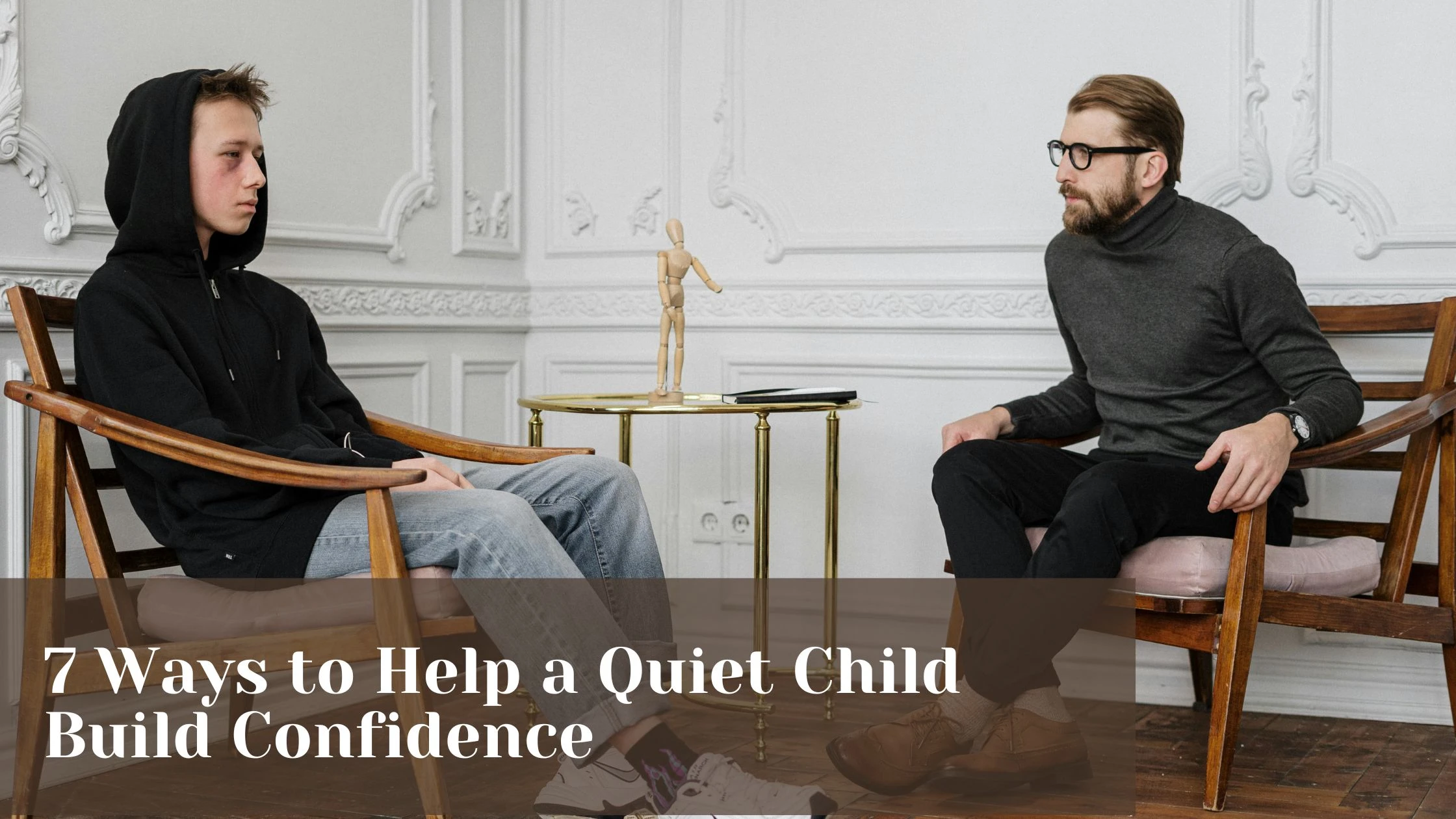
You’re at the pediatrician’s office, and the doctor asks your eight-year-old how they’re feeling. Your child looks down, saying nothing, shrinking into themselves. You wait a beat, hoping they’ll respond, but the silence stretches. So you jump in: “They’ve had a sore throat for two days, and a bit of a fever last night.” Later, in the car, your child says quietly, “I wanted to tell her myself.” Your heart sinks. You were trying to help, but you realize you just sent the message that they can’t speak for themselves.
Or maybe it’s this: Your fifth-grader comes home frustrated because they got seated next to the loud, disruptive kid again—for the third time this year. “Did you ask your teacher if you could move?” you inquire. They shake their head. “Why not?” you press. “I don’t know,” they whisper. “I just…I can’t.” You feel a mixture of concern and frustration. How will they navigate life if they can’t advocate for even basic needs like where they sit in class?
If you’re the parent of a quiet child, these scenarios probably feel painfully familiar. You see your child’s potential—their thoughtfulness, their creativity, their kindness—but you also see them holding back, staying silent when they should speak up, letting others speak for them. You worry about whether they’ll be able to handle job interviews, difficult conversations, or standing up for themselves when it matters.
But here’s what most parents don’t realize: building confidence in a quiet child isn’t about making them louder. It’s about honoring who they are while equipping them with the skills to navigate a world that often rewards the outspoken. It’s about helping them find their voice, not forcing them to sound like someone else.
Understanding Quiet Children and Confidence
Before we explore how to build confidence, let’s clarify what we’re actually talking about—because there’s a crucial distinction many parents miss.
According to research from October 2023, not all introverts are shy, and shyness is not the same as being an introvert. Introversion refers to an innate part of temperament—orientation toward the world and how one interacts with it. Introverts find alone time refreshing and energizing. Shyness, on the other hand, is an emotion—a feeling of being nervous, awkward, or uncomfortable around other people, especially in large groups or with unfamiliar people.
Why does this matter? Because the strategies for supporting an introverted child who’s perfectly content being quiet are different from those for a child whose quietness stems from anxiety or lack of confidence.
Research published in July 2025 from Rice Psychology Group emphasizes that introverted children thrive in calm, supportive environments and often possess deep thinking, rich imaginations, and emotional depth. An introverted child may not seek out group activities or speak up often, but that doesn’t mean they’re struggling. These children prefer meaningful one-on-one interactions, thoughtful reflection, and slower transitions.
The goal isn’t to change your child’s fundamental temperament. The goal is to build confidence within who they authentically are—helping them develop skills to speak up when necessary while respecting their natural inclination toward thoughtfulness and observation.
Let’s look at seven ways to help your quiet child build genuine confidence.
7 Ways to Build Confidence in Quiet Children
1. Stop Labeling Them as “Shy”—Reframe Their Quietness as Strength
This is perhaps the most important shift you can make, and it starts with the language you use to describe your child—both to them and to others.
What this looks like:
- When your child doesn’t respond immediately to someone’s greeting, resist saying “Sorry, they’re shy”
- Instead, try: “They like to listen for a bit before joining the conversation” or “They’re taking their time to warm up”
- When discussing your child with other adults, avoid defining them by their quietness
- Actively point out the strengths that come with their temperament
According to research from October 2023, one mistake adults make is referring to their child as “shy.” While this is natural, in time, it starts to stick: “Shy” becomes part of who they are, and they accept it. In reality, shyness is an emotion—something temporary—and it can change as a child learns key skills and builds confidence.
Why this matters: Labels become self-fulfilling prophecies. When you consistently describe your child as shy, you’re inadvertently reinforcing an identity they may then feel compelled to live up to. “I’m the shy one” becomes part of their core self-concept, making it harder to step outside that role even when they want to.
Research from September 2025 found that repeatedly being told to “have more confidence” or being labeled as too quiet actually damaged confidence rather than building it. One adult who was a quiet child reflected: “The more I was questioned about why I was quiet, the more I started to believe that something was wrong with me.”
What to do instead: Celebrate the positive aspects of their temperament. Quiet children are often exceptional listeners, deeply observant, thoughtful before speaking, empathetic, creative, and loyal friends. Make sure your child hears you pointing these out: “I love how you really think before you speak—what you say is always worth hearing” or “You notice things other people miss. That’s a real gift.”
When others comment on your child’s quietness, respond confidently: “Yes, they’re observant and thoughtful. They contribute when they have something important to say.” This communicates to your child that their way of being is valuable, not deficient.
2. Teach Self-Advocacy Skills Through Practice and Scripting
One of the most practical ways to build confidence is giving quiet children the actual words and practice they need to advocate for themselves.
What this looks like:
- Practicing specific phrases at home before they need them in real situations
- Role-playing scenarios like ordering food, asking a teacher for help, or introducing themselves
- Providing sentence starters: “Can I have…?” “I don’t understand…” “I need help with…”
- Gradually transferring tasks from you to them
According to research from April 2024, kids may not know the words to say when they want or need something, but you can help them build that vocabulary by teaching them how to ask. Scripting language for kids helps them build self-advocacy, and giving tasks to younger children boosts their confidence.
Why this matters: Quiet children often stay quiet not because they don’t want to speak, but because they don’t know exactly what to say or how to say it. Anxiety about getting the words wrong keeps them silent. When you give them a script and let them practice in the safety of home, you remove that barrier.
A May 2024 study on self-advocacy skills found that when children practice self-advocacy with specific language and role-playing, they develop confidence to use these skills in real situations. The research emphasizes that self-advocacy is a skill that can be learned, just like math or reading, and improves with practice.
What to do instead: Start with low-stakes practice. Before going to a restaurant, role-play ordering: “When the server asks what you’d like, you can say ‘Can I have the chicken nuggets, please?'” Practice what happens if they ask a follow-up question: “If they ask what side you want, you can say ‘Fries, please.'”
Do the same for school situations. If your child needs to ask the teacher a question, practice at home: “Mrs. Johnson, I don’t understand the homework. Can you explain it again?” The more they practice in a safe environment, the more automatic it becomes in real situations.
3. Create Opportunities for Gradual Independence
Confidence grows through competence. When children successfully do things on their own, they build belief in their abilities—which makes the next challenge feel less daunting.
What this looks like:
- Letting your child order their own food at restaurants
- Having them ask a store employee where to find an item
- Encouraging them to answer when someone asks them a direct question, even if they’re standing next to you
- Building in extra time so they can complete tasks independently rather than you doing it for them
Research from December 2024 emphasizes that empowering children by offering choices and giving them opportunities to make decisions helps them build the confidence to assert their needs and preferences. When children have confidence in their abilities, it makes it easier for them to speak up when they need help.
Why this matters: Every time you speak for your child when they could speak for themselves, you inadvertently communicate that you don’t believe they can do it. Even when your intentions are pure—you’re helping, speeding things along, reducing their anxiety—the implicit message is “You can’t handle this.”
According to an October 2025 article from Introvert Dear, a parent’s first instinct is often to jump in and “save” their introverted children from their quiet nature when things aren’t going as planned. This could be something as simple as speaking for them or as complicated as fixing a problem with a friend. But this intervention, while well-intentioned, robs children of the opportunity to develop their own voice.
What to do instead: Resist your urge to rescue. When the doctor asks your child a question, stay quiet and let them answer, even if there’s an awkward pause. If they truly freeze up, you can prompt: “Can you tell the doctor about your sore throat?” rather than immediately answering for them.
Start with small, manageable challenges and gradually increase difficulty. Maybe Week 1, they order their food. Week 2, they also specify what side dish they want. Week 3, they handle a follow-up question from the server. Each small success builds their confidence for bigger challenges.
4. Respect Their Need to Recharge—Don’t Overschedule
Quiet, introverted children need downtime to process experiences and recharge their batteries. When they’re constantly overscheduled and overstimulated, they don’t have the internal resources to step outside their comfort zone.
What this looks like:
- Building quiet time into the daily schedule
- Limiting extracurricular activities to what they can genuinely handle without depletion
- Creating a calm, comfortable space where they can retreat
- Allowing alone time after school before jumping into homework, chores, or activities
- Respecting when they say they need a break
According to December 2024 research, introverted children recharge by spending time alone, and respecting this need is essential. When introverted children have the chance to recharge, they feel less overwhelmed and more confident when it’s time to engage with others again.
Why this matters: Social interaction and new experiences require energy—especially for quiet children. When they’re depleted, even small challenges feel insurmountable. But when they’re rested and resourced, they’re much more likely to take appropriate risks and speak up when needed.
Think of confidence as requiring internal battery power. If your child’s battery is constantly drained from too much stimulation and not enough restoration, they won’t have the energy needed to push through discomfort. But if they’re regularly recharged, they have more capacity to be brave.
What to do instead: After a full day at school, allow decompression time before expecting engagement. Maybe that’s 30 minutes of reading alone, drawing, or just being in their room quietly. Don’t view this as antisocial—view it as essential self-care that enables them to show up as their best selves.
When planning activities, consider quality over quantity. One activity they genuinely enjoy and excel at is better than three activities that exhaust them. Ask your child what feels like too much and actually listen to their answer.
5. Focus on Strengths, Not Just Areas for Growth
Confidence comes from knowing what you’re good at and having that recognized by people who matter. Quiet children often hear messages about what they should change—speak up more, be more outgoing, make more friends—without hearing what’s valuable about exactly who they are.
What this looks like:
- Explicitly naming their strengths regularly
- Celebrating their quiet achievements (deep thinking, careful work, thoughtful responses)
- Pointing out when their temperament serves them well
- Creating opportunities for them to use their natural gifts
April 2025 research from HeyKiddo emphasizes that introverted kids bring a lot to the table: they often excel at listening, observing, and thinking deeply. They can be loyal friends, creative problem-solvers, and compassionate people. Making sure your child knows these are strengths to be proud of is crucial.
Why this matters: When children only hear about what needs to change, they internalize the message that who they are isn’t good enough. This doesn’t build confidence—it creates shame. But when they regularly hear specific, genuine appreciation for their natural strengths, they develop a solid sense of self-worth that isn’t contingent on becoming someone else.
Research from May 2024 found that when kids are more confident, they’re better prepared to speak up and advocate for themselves. One key way to boost confidence is by discussing individual strengths and having students create a “compliment list” that reminds them what they’re great at.
What to do instead: Make it a habit to notice and name their specific strengths. Instead of generic praise like “good job,” try: “I noticed how carefully you listened to that entire story before you responded. That’s a real skill—most people interrupt before the person is done talking.”
Create concrete evidence of their strengths. Keep a “wins” journal where you write down moments when their temperament served them well. Pull it out when they’re feeling down about being quiet.
6. Introduce New Situations Gradually With Support
Confidence doesn’t come from being thrown into the deep end. It comes from successfully navigating challenges that are just slightly beyond your current comfort zone—with support available if needed.
What this looks like:
- Visiting new places when they’re less crowded first
- Arriving early to parties or events before the crowd arrives
- Starting with one-on-one playdates before group activities
- Providing specific “jobs” or roles in new situations (helping with food, greeting guests)
- Staying nearby initially, then gradually creating more distance as confidence grows
Research from December 2024 advises that instead of expecting introverted children to jump right into new environments and social settings, parents should introduce new situations gradually. This approach helps children feel less overwhelmed and builds confidence incrementally.
Why this matters: When quiet children are pushed too hard, too fast into situations that overwhelm them, it confirms their worst fears: new situations are dangerous, and they can’t handle them. But when they’re gradually exposed with appropriate support, they build evidence that they can handle challenge—and their confidence grows genuinely rather than being forced.
What to do instead: Before starting a new activity, visit the location when it’s quiet so your child can familiarize themselves with the space. Before attending a birthday party, arrive 10 minutes early so your child can acclimate before the chaos begins.
Give them a specific role or task that provides structure. At a family gathering, maybe they’re in charge of helping set the table or taking coats. This gives them something concrete to do rather than just “being social,” which can feel overwhelming and ambiguous.
7. Model Self-Advocacy and Teach Them It’s Okay to Say No
Quiet children often become people-pleasers who struggle to set boundaries because they fear disappointing others or causing conflict. Teaching them that it’s okay to advocate for their needs—including saying no—is crucial for long-term confidence.
What this looks like:
- Demonstrating how you politely decline things: “That doesn’t work for me, but thank you for thinking of me”
- Showing them how you advocate for your needs: “I need a few minutes of quiet before we start dinner”
- Teaching them the difference between being rude and being assertive
- Giving them explicit permission to say no to things that make them uncomfortable (including physical affection with relatives)
- Celebrating when they do advocate for themselves, even if it’s inconvenient for you
Research from December 2024 defines self-advocacy as the ability to express one’s needs, desires, and rights clearly and respectfully. Teaching children how to identify their emotions and use strategies before advocating for themselves helps them approach situations calmly and respectfully.
Why this matters: If your child never sees you setting boundaries or hears you say no, they learn that their own needs don’t matter as much as keeping peace or pleasing others. But when you model healthy self-advocacy, you give them permission to do the same.
An October 2025 Introvert Dear article notes that many introverts have people-pleasing tendencies. They’ve been “yes” people when they wanted to be “no” people countless times, often because society knows introverts won’t complain out loud. Teaching children to stand up for themselves when it counts is crucial.
What to do instead: Narrate your own boundary-setting: “Aunt Sarah invited us to dinner, but I’m going to say no because we already have plans and I don’t want us to be too busy.” This shows them that saying no is normal and acceptable.
Give them language for setting boundaries: “That doesn’t feel right to me,” “I’d rather not,” “Can I think about it?” Practice these phrases at home so they’re ready when needed.
Most importantly, honor their boundaries even when it’s inconvenient. If your child says they’re not comfortable hugging a relative, back them up: “They’re not feeling like hugs today. How about a high-five?” This teaches them that their comfort matters and that you’ll support them.
The Deeper Truth About Quiet Confidence
If there’s one thing I want you to walk away with, it’s this: confidence doesn’t require loudness. True confidence is quiet self-assurance—knowing your worth, trusting your abilities, and speaking up when it matters, even if your voice shakes.
Your quiet child doesn’t need to become the most talkative person in the room. They need to develop the skills to navigate a world that sometimes rewards volume while maintaining their authentic self. They need to know that their thoughtfulness is valuable, their observations matter, and their voice—used sparingly but intentionally—carries weight.
According to July 2025 research, every introverted child brings unique gifts to the world—curiosity, compassion, creativity, and depth. With understanding and support, they can flourish in all areas of life without needing to change who they are.
The goal isn’t conformity to an extroverted ideal. The goal is equipping your child with skills to advocate for themselves, take appropriate risks, and communicate their needs—all while honoring the quiet strength that makes them who they are.
Moving Forward With Your Quiet Child
Building confidence in a quiet child is a marathon, not a sprint. You won’t see dramatic overnight changes. Instead, you’ll notice small shifts: the time they ordered for themselves without prompting, the moment they asked the teacher a question, the day they set a boundary with a pushy friend.
Celebrate these moments. Point them out. Keep evidence of their growth. On days when they feel discouraged about being “the quiet one,” you can remind them of all the times they’ve been brave in their own way.
Remember that you’re not trying to change who they fundamentally are. You’re helping them develop skills to navigate a world that doesn’t always understand or appreciate quiet strength. You’re showing them that their voice matters, even when it’s soft. You’re teaching them that confidence isn’t about volume—it’s about knowing yourself and having the courage to be that person, even when it’s hard.
Your quiet child is exactly who they’re meant to be. Your job is simply to help them see that—and to give them the tools they need to share their gifts with a world that desperately needs more thoughtful, observant, deeply feeling people.
Are you raising a quiet child? What strategies have worked for building their confidence while honoring their temperament? Share your experience in the comments below—your story might be exactly what another parent needs to hear.
And if this post helped you see your quiet child’s potential in a new light, please share it with another parent. Every quiet child deserves adults who understand that their silence isn’t a deficit—it’s often where their greatest strengths are being cultivated.